 comparison
Thyroid Authority vs. Comprehensive Programs: 2026 Comparison
Table of Contents
- Why Conventional Thyroid Care Falls Short
- What Separates Comprehensive Thyroid Health Programs
- How a Functional Medicine Thyroid Specialist Online Differs from Traditional Endocrinologists
- The Role of Functional Medicine Thyroid Labs List in Root-Cause Diagnosis
- Understanding Thyroid Recovery Timeline and Program Duration
- Thyroid Authority's EPIC Five Framework: A Structured Approach
- How Comprehensive Programs Address Autoimmune Thyroid Conditions
- Choosing the Right Program for Your Thyroid Health Journey
- Conclusion
- Frequently Asked Questions
Last Updated: August 31, 2026
Why Conventional Thyroid Care Falls Short
Most people with thyroid dysfunction walk out of their endocrinologist's office with a single number: their TSH level. If it falls within the standard reference range, they're told their thyroid is fine, even when they're exhausted, gaining weight inexplicably, losing hair, and struggling with brain fog. This disconnect between lab results and lived experience is the core problem with conventional thyroid care.
The issue isn't that TSH testing is wrong. It's that it's incomplete. TSH measures how hard your pituitary gland is working to stimulate your thyroid, but it tells you almost nothing about whether your body is actually converting thyroid hormone into the forms it can use, whether your immune system is attacking your thyroid tissue, or whether nutritional deficiencies are blocking thyroid function at the cellular level. According to the American Thyroid Association's clinical guidelines, TSH alone misses subclinical hypothyroidism and autoimmune thyroid conditions in a significant portion of patients who report persistent symptoms.
This is where comprehensive thyroid health programs differ fundamentally. Rather than relying on a single marker, they order a full thyroid panel that includes Free T3, Free T4, reverse T3, thyroid peroxidase antibodies, and thyroglobulin antibodies. They measure nutritional status, zinc, selenium, iron, B vitamins, because your body cannot manufacture thyroid hormone without these cofactors. They examine the relationship between gut health, immune function, and thyroid conversion. They don't stop at "normal" lab values; they look for optimal ranges where patients actually feel well.
At Thyroid Authority, we've spent over two decades refining what a truly comprehensive thyroid assessment looks like. Dr. Jason Bradley, Vice President of the American Board of Functional Medicine, and Dr. Rachel, Vice President of the American Board of Nutrition, built the EPIC Five Framework precisely because they saw thousands of patients dismissed by conventional medicine despite clear signs of thyroid dysfunction. The framework moves beyond symptom management to identify root causes, whether that's autoimmune attack, nutritional deficiency, gut dysbiosis, or hormone conversion problems.
What Separates Comprehensive Thyroid Health Programs
Not all thyroid programs are created equal. Some offer basic supplement recommendations and dietary guidance. Others provide lab testing but no structured pathway to recovery. The best comprehensive thyroid health programs share several defining characteristics.
First, they're physician-led, not algorithm-driven. A doctor reviews your complete health history, your symptom timeline, and your lab results together, not in isolation. They understand that thyroid dysfunction rarely exists alone. It intersects with adrenal fatigue, gut permeability, autoimmune activation, and hormonal imbalance. A practitioner who's trained in functional medicine recognizes these connections; a conventional endocrinologist often doesn't.
Second, they test beyond TSH. A functional medicine thyroid specialist online orders comprehensive panels that include Free T3 and Free T4 (the actual hormones circulating in your blood), reverse T3 (which can block Free T3 from working), thyroid antibodies (to identify autoimmune attack), and micronutrient status. They look at how efficiently your body converts T4 into the active T3 form. They assess whether your gut is permeable, whether your liver is conjugating hormones properly, whether nutritional deficiencies are limiting thyroid function.
Third, they provide structure and accountability. Thyroid recovery isn't a one-time fix. It requires sustained lifestyle change, dietary adjustment, supplementation, and monitoring. The best programs give you a clear roadmap, specific steps in a specific sequence, rather than a list of recommendations you're left to navigate alone. They include regular check-ins, lab rechecking at meaningful intervals, and adjustments based on your response.
Fourth, they address root causes, not just symptoms. Many programs will tell you to cut out gluten and take supplements. That's not root cause analysis; that's symptom suppression. True root cause work asks: Why is your gut permeable? Why are you deficient in selenium? Why is your immune system attacking your thyroid? The answers to those questions determine your actual treatment path.
How a Functional Medicine Thyroid Specialist Online Differs from Traditional Endocrinologists
The difference between a functional medicine thyroid specialist online and a traditional endocrinologist comes down to philosophy and scope.
Traditional endocrinologists are trained to diagnose and manage thyroid disease using established diagnostic criteria and pharmaceutical intervention. Their framework is: test TSH, if abnormal, prescribe levothyroxine, retest TSH in 6 weeks, adjust dose until TSH is "normal." This works well for overt hypothyroidism. It fails for subclinical hypothyroidism, autoimmune thyroiditis without overt hormone deficiency, and cases where patients remain symptomatic despite "normal" TSH.
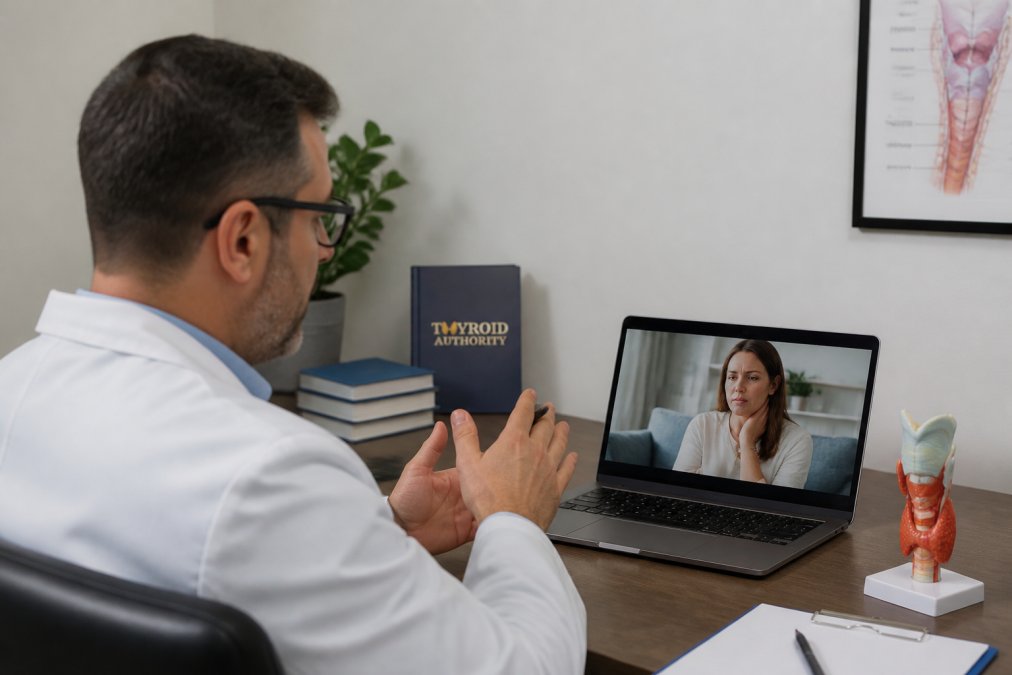
A functional medicine thyroid specialist operates from a different framework. They see thyroid dysfunction as a symptom of deeper imbalance, nutritional deficiency, immune dysregulation, gut dysfunction, hormonal interference. They order comprehensive labs not to diagnose disease, but to understand your biochemistry. They ask: What's preventing your body from making and using thyroid hormone efficiently? What nutritional cofactors are missing? Is your immune system attacking your thyroid, and if so, what triggered that autoimmune response?
The endocrinologist's goal is to normalize lab values. The functional medicine specialist's goal is to restore function and eliminate symptoms. Those aren't always the same thing. You can have "normal" TSH and still feel terrible if your Free T3 is low, your reverse T3 is high, or your body isn't converting T4 into usable T3. The functional medicine specialist will catch that and address it. The endocrinologist might not even test for it.
Virtual care removes geography as a barrier. A functional medicine thyroid specialist online can serve patients nationwide, which means you're not limited to the few functional medicine doctors in your area. You get access to practitioners who've spent years studying thyroid dysfunction specifically, who've treated thousands of patients, who understand the nuances of autoimmune thyroid disease and hormone optimization.
The trade-off is that virtual care requires more patient engagement. You're responsible for ordering your own labs (though the program guides you), tracking your symptoms, and implementing lifestyle changes without in-person supervision. But for most people with thyroid dysfunction, this is actually an advantage. You get a doctor who specializes in thyroid health, not a generalist who sees thyroid as one of many endocrine conditions.
The Role of Functional Medicine Thyroid Labs List in Root-Cause Diagnosis
Here's what most people don't understand about thyroid testing: the tests your conventional doctor orders are designed to diagnose thyroid disease, not to optimize thyroid function.
A standard TSH test tells you whether your pituitary thinks your thyroid needs stimulation. It doesn't tell you whether your thyroid is actually producing hormone, whether that hormone is in a usable form, whether your cells can receive it, or whether nutritional deficiencies are blocking the entire process. A comprehensive functional medicine thyroid labs list fills those gaps.
The essential biomarkers include:
Free T4 and Free T3 measure the actual thyroid hormones circulating in your blood in unbound form, the form your cells can use. TSH can be normal while Free T3 is dangerously low, which explains why you feel exhausted despite "normal" lab results.
Reverse T3 is an inactive form of T3 that your body produces under stress. When reverse T3 is elevated, it blocks your Free T3 from working, creating a functional hypothyroid state even if your Free T4 looks fine. Conventional doctors rarely test this.
Thyroid peroxidase (TPO) antibodies indicate whether your immune system is attacking your thyroid tissue. This is the hallmark of autoimmune thyroiditis (Hashimoto's disease). You can have elevated TPO antibodies years before TSH becomes abnormal, which means you can address the autoimmune attack before it destroys thyroid tissue.
Thyroglobulin antibodies are another marker of autoimmune thyroid attack. Testing both TPO and thyroglobulin gives a more complete picture of immune activation.
Micronutrient panel should include zinc, selenium, iron (ferritin and iron saturation), and B vitamins. Your body cannot synthesize thyroid hormone without these nutrients. Deficiency in any one of them can block thyroid function completely, regardless of how much hormone you're producing.
Gut health markers like zonulin (indicates intestinal permeability) and inflammatory markers help identify whether leaky gut is driving immune activation against your thyroid.
Why does this matter? Because root cause diagnosis requires understanding the full picture. If your TPO antibodies are elevated, you need an immune-modulating protocol, not just more thyroid hormone. If your ferritin is low, you need iron repletion, not just levothyroxine. If your reverse T3 is high, you need stress management and metabolic support, not a higher T4 dose. A functional medicine thyroid labs list reveals which of these factors is actually driving your symptoms.
Understanding Thyroid Recovery Timeline and Program Duration
This is where patience becomes critical. Thyroid recovery isn't fast, and anyone promising quick fixes is overselling.
Your thyroid gland takes time to heal. If your immune system has been attacking it (autoimmune thyroiditis), shifting that immune response requires sustained intervention, typically 6 to 12 months minimum (peer-reviewed research). Your gut lining needs time to repair if it's permeable. Your nutrient stores need time to replenish. Your metabolism needs time to adapt as your thyroid function improves.
Most comprehensive thyroid health programs are structured as 12-month commitments for this reason. The first 3 months focus on diagnosis and initial intervention, running comprehensive labs, identifying root causes, beginning nutritional repletion and dietary changes. The next 3 months focus on implementation and early adaptation, your body begins responding to treatment, symptoms start shifting, energy begins returning. Months 6 through 9 are often when the most dramatic improvements occur, fatigue lifts, brain fog clears, weight stabilizes. The final quarter focuses on optimization and long-term sustainability, fine-tuning your protocol, addressing remaining symptoms, building habits that will keep you well.
This timeline assumes you're compliant with the program. If you're inconsistent with supplementation, dietary changes, or lifestyle modifications, recovery takes longer. If you're dealing with multiple autoimmune conditions or severe nutritional deficiency, it may take longer still. Some people see significant improvement by month 4 or 5. Others need the full 12 months to feel truly well.
Why 12 months and not 6? Because thyroid recovery is not linear. You'll have weeks of improvement followed by plateaus. You'll have setbacks when you're under stress. Your labs will improve before your symptoms fully resolve, or vice versa. A good program doesn't rush you through this process; it guides you through it systematically, adjusting your protocol based on your response.
The alternative, the conventional approach of "take this medication and see me in 6 weeks", doesn't work for most people with autoimmune thyroid disease or complex thyroid dysfunction. That's why so many people end up in comprehensive thyroid health programs in the first place: they've already tried the quick-fix approach and it failed them.
Thyroid Authority's EPIC Five Framework: A Structured Approach
The EPIC Five Framework is built on over two decades of measuring and refining patient outcomes. Dr. Jason Bradley and Dr. Rachel developed it specifically because they saw a gap: patients needed a structured, reproducible pathway from diagnosis to recovery, not just a collection of recommendations.
EPIC stands for: Evaluate, Plan, Implement, Check, and Evolve.

Evaluate means comprehensive assessment. This is where the full thyroid labs list comes in. Rather than a single TSH, Thyroid Authority orders the complete panel: Free T3, Free T4, reverse T3, TPO and thyroglobulin antibodies, micronutrients, inflammatory markers, and gut health indicators. The doctors review your complete symptom history, your timeline of illness, your current lifestyle, your dietary patterns, and your stress load. They're building a biochemical and lifestyle picture of why your thyroid stopped working.
Plan means creating your personalized protocol. Based on what the Evaluate phase revealed, the doctors design a specific treatment plan. If autoimmune attack is driving your symptoms, the plan includes immune-modulating nutrition and lifestyle changes. If nutritional deficiency is the limiting factor, the plan specifies which nutrients, in what doses, for how long. If gut dysfunction is present, the plan addresses that. The plan isn't generic; it's built for your specific biochemistry and your specific root causes.
Implement is where you do the work. You follow the dietary recommendations. You take the supplements as prescribed. You make the lifestyle changes, sleep optimization, stress management, movement, community. This is the phase where most people struggle, because change is hard. But it's also where you start feeling better. Energy returns. Brain fog lifts. The effort becomes worth it.
Check means measurement and accountability. At regular intervals (typically 6-8 weeks), you retest your labs. The doctors review your progress against your baseline. They look at what's improved, what's stalled, what needs adjustment. This isn't guesswork; it's data-driven refinement. If your TPO antibodies are dropping, the immune protocol is working. If your Free T3 is still low despite supplementation, you might need additional support with conversion. The Check phase ensures you're making progress and guides the next adjustments.
Evolve means your protocol changes as you heal. What worked in month 3 might not be what you need in month 9. As your thyroid function improves, you may need less supplementation. As your immune system settles, your dietary restrictions might ease. As your energy returns, your exercise capacity increases. The program evolves with you, rather than locking you into a static protocol.
This structured approach is why Thyroid Authority differs from programs that simply order labs and send you a list of recommendations. The framework ensures systematic progress, regular accountability, and continuous refinement based on your actual response.
How Comprehensive Programs Address Autoimmune Thyroid Conditions
Autoimmune thyroid disease (Hashimoto's thyroiditis) requires a different approach than non-autoimmune hypothyroidism. Your immune system is actively attacking your thyroid tissue, which means hormone replacement alone won't solve the problem. You need to address the immune dysregulation itself.
This is where comprehensive thyroid health programs separate from conventional care. An endocrinologist will test your TPO antibodies, confirm autoimmune thyroiditis, and prescribe levothyroxine. That's appropriate, but it's incomplete. The program doesn't address why your immune system started attacking your thyroid in the first place.
Comprehensive programs investigate the root causes of immune activation. These typically include:
Gut dysfunction. A permeable gut lining (leaky gut) allows bacterial lipopolysaccharides and partially digested proteins to cross into your bloodstream, triggering immune activation (peer-reviewed research). If your thyroid peroxidase (TPO) looks similar to these bacterial antigens, your immune system may cross-react and attack your thyroid. Healing your gut, through dietary changes, nutrient repletion, and targeted supplementation, reduces this trigger.
Nutritional deficiency. Zinc, selenium, iron, and vitamin D are critical for immune regulation. Deficiency in any of these skews your immune system toward autoimmune attack. Comprehensive programs measure these nutrients and replete them systematically.
Intestinal infections. Some people develop autoimmune thyroiditis after a viral or bacterial infection triggers immune dysregulation. Identifying and treating any ongoing infection can help reset immune function.
Stress and nervous system dysregulation. Chronic stress shifts your immune system toward Th1 dominance (cell-mediated immunity), which is associated with autoimmune attack. Comprehensive programs include nervous system regulation strategies, meditation, yoga, breathwork, social connection, to reduce this immune skewing.
Molecular mimicry. If you've had a prior infection (like EBV or strep), your immune system may have learned to attack antigens that look like those pathogens. If those antigens are similar to thyroid peroxidase, you get autoimmune thyroiditis. Some comprehensive programs test for prior infections and use targeted protocols to reduce this cross-reactivity.
The goal isn't just to suppress your immune system (which conventional medicine doesn't even attempt). It's to address the underlying triggers that caused immune dysregulation in the first place. When you fix the leaky gut, replete the nutrients, manage the stress, and resolve any lingering infections, your immune system often settles. Your TPO antibodies drop. Your thyroid stops being attacked. You don't need to live with autoimmune thyroiditis; you can move toward remission.
Choosing the Right Program for Your Thyroid Health Journey
Not every comprehensive thyroid health program will be right for you. Here's what to evaluate.
Physician credentials matter. Your program should be led by doctors with genuine functional medicine training, not just MDs who've added functional medicine to their practice. Look for board certification in functional medicine (American Board of Functional Medicine) and nutrition (American Board of Nutrition). Dr. Jason Bradley's credentials, Vice President of the American Board of Functional Medicine, over 26 years of thyroid expertise, three doctorate degrees, represent the level of training you should expect.
Testing depth. Ask what labs the program orders. If they're only testing TSH and Free T4, they're not doing comprehensive assessment. Minimum should include Free T3, reverse T3, TPO antibodies, thyroglobulin antibodies, and a micronutrient panel. Ideally, they'll also assess gut health, inflammatory markers, and adrenal function.
Structure and accountability. Does the program provide a clear pathway from month 1 to month 12? Or is it loose recommendations you're left to implement alone? The best programs have structured phases, regular check-ins, lab rechecking at meaningful intervals, and clear adjustments based on your progress.
Cost and commitment. Comprehensive thyroid health programs require both time and money. Be realistic about both. A 12-month program requires sustained engagement. It requires implementing dietary changes, taking supplements consistently, and showing up for regular appointments. If you're not ready for that commitment, a shorter program might be better. If cost is a barrier, ask about payment plans or whether the program offers a complimentary discovery session to assess whether it's right for you.
Autoimmune specificity. If you have Hashimoto's or another autoimmune thyroid condition, ensure the program has specific protocols for immune modulation, not just hormone optimization. Not all comprehensive programs address autoimmune disease adequately.
Client outcomes. Programs should be able to share aggregate outcome data (without breaching privacy) that demonstrates their effectiveness.
| Program Element | What to Look For | Why It Matters |
|---|---|---|
| Physician training | Board certification in functional medicine and nutrition | Ensures evidence-based functional approach, not just conventional with supplements |
| Lab testing | Minimum 10 biomarkers including Free T3, reverse T3, TPO antibodies | Comprehensive assessment identifies root causes conventional testing misses |
| Structure | 12-month program with defined phases and regular checkpoints | Systematic progression ensures sustained recovery, not just initial improvement |
| Accountability | Regular check-ins, lab rechecking, protocol adjustments | Data-driven refinement based on your actual response prevents plateaus |
| Autoimmune focus | Specific immune-modulating protocols if you have Hashimoto's | Addresses root cause of immune attack, not just hormone replacement |
| Accessibility | Virtual nationwide service | Removes geography barriers, allows access to specialists regardless of location |
Conclusion
Conventional thyroid care fails because it relies on a single marker, TSH, to assess a complex system. Comprehensive thyroid health programs succeed because they evaluate the full cascade of thyroid hormones, immune markers, nutritional status, and lifestyle factors that actually determine how you feel.
The difference between a traditional endocrinologist and a functional medicine thyroid specialist online is the difference between treating a lab value and treating a person. One adjusts your medication until your TSH looks normal. The other asks why your thyroid stopped working and systematically addresses those root causes.
Thyroid Authority's approach, structured around the EPIC Five Framework and guided by physicians like Dr. Jason Bradley and Dr. Rachel who've spent decades refining what actually works, offers a pathway from diagnosis to recovery. Rather than accepting that you'll feel tired and overweight despite "normal" labs, you get access to comprehensive assessment, personalized protocols, and systematic progress tracking.
If you've been dismissed by conventional medicine, if your labs look "fine" but you feel terrible, if you're ready to move beyond symptom management toward actual recovery, a comprehensive thyroid health program is worth exploring. Apply for the Thyroid Authority Program to schedule a complimentary discovery session and learn whether their approach is right for your specific situation.
Frequently Asked Questions
Q: What makes a comprehensive thyroid health program different from my regular endocrinologist?
A: Comprehensive thyroid health programs go beyond standard TSH testing to examine free T3, free T4, reverse T3, thyroid peroxidase antibodies, and thyroglobulin antibodies. They also assess nutritional status, gut health, adrenal function, and immune markers. Where conventional endocrinologists focus on medication dosing, comprehensive programs identify root causes of dysfunction, whether autoimmune, nutritional, or lifestyle-related, and address them systematically over time.
Q: How long does thyroid recovery timeline typically take with a structured program?
A: Most comprehensive thyroid programs recommend 12 months for meaningful recovery and optimization. This timeframe allows for thorough assessment, implementation of dietary and lifestyle changes, lab monitoring, and medication or supplement adjustments. Many patients report improved energy and clarity within 3-6 months, but achieving full autoimmune remission and metabolic optimization typically requires the full year of structured support and personalized refinement.
Q: Can a functional medicine thyroid specialist online actually identify problems my in-person endocrinologist missed?
A: Yes. Functional medicine thyroid specialists online order expanded biomarker panels that conventional labs often skip. They examine optimal reference ranges rather than just normal ranges, assess the interconnection between thyroid, gut, adrenal, and immune function, and spend more time on root-cause analysis. Virtual specialists can also integrate detailed symptom tracking, lifestyle history, and ongoing patient data in ways that time-limited in-person visits cannot, allowing them to catch patterns and deficiencies that traditional practitioners overlook.
Q: What is included in a functional medicine thyroid labs list that standard TSH testing doesn't cover?
A: A comprehensive functional medicine thyroid labs list includes TSH, free T3, free T4, reverse T3, thyroid peroxidase (TPO) antibodies, thyroglobulin antibodies, thyroid-binding globulin, plus micronutrient panels (iron, ferritin, B12, folate, selenium, zinc), inflammatory markers, cortisol levels, and gut health markers. These tests reveal nutritional deficiencies, autoimmune activity, conversion efficiency, and systemic factors driving thyroid dysfunction, information standard TSH alone cannot provide.
Q: Is a 12-month program really necessary, or can I see results faster?
A: While some patients notice symptom improvement within 3-6 months, true root-cause resolution and sustainable health transformation typically require 12 months. This allows time for gut healing, nutritional repletion, immune regulation, and metabolic recalibration. Rushing the process often leads to relapse. The 12-month structure ensures your program addresses not just symptoms but the underlying dysfunction driving them.
This article was written using GrandRanker
Frequently Asked Questions
Q: What makes a comprehensive thyroid health program different from my regular endocrinologist?
A: Comprehensive thyroid health programs go beyond standard TSH testing to examine free T3, free T4, reverse T3, thyroid peroxidase antibodies, and thyroglobulin antibodies. They also assess nutritional status, gut health, adrenal function, and immune markers. Where conventional endocrinologists focus on medication dosing, comprehensive programs identify root causes of dysfunction—whether autoimmune, nutritional, or lifestyle-related—and address them systematically over time.
Q: How long does thyroid recovery timeline typically take with a structured program?
A: Most comprehensive thyroid programs recommend 12 months for meaningful recovery and optimization. This timeframe allows for thorough assessment, implementation of dietary and lifestyle changes, lab monitoring, and medication or supplement adjustments. Many patients report improved energy and clarity within 3-6 months, but achieving full autoimmune remission and metabolic optimization typically requires the full year of structured support and personalized refinement.
Q: Can a functional medicine thyroid specialist online actually identify problems my in-person endocrinologist missed?
A: Yes. Functional medicine thyroid specialists online order expanded biomarker panels that conventional labs often skip. They examine optimal reference ranges rather than just normal ranges, assess the interconnection between thyroid, gut, adrenal, and immune function, and spend more time on root-cause analysis. Virtual specialists can also integrate detailed symptom tracking, lifestyle history, and ongoing patient data in ways that time-limited in-person visits cannot, allowing them to catch patterns and deficiencies that traditional practitioners overlook.
Q: What is included in a functional medicine thyroid labs list that standard TSH testing doesn't cover?
A: A comprehensive functional medicine thyroid labs list includes TSH, free T3, free T4, reverse T3, thyroid peroxidase (TPO) antibodies, thyroglobulin antibodies, thyroid-binding globulin, plus micronutrient panels (iron, ferritin, B12, folate, selenium, zinc), inflammatory markers, cortisol levels, and gut health markers. These tests reveal nutritional deficiencies, autoimmune activity, conversion efficiency, and systemic factors driving thyroid dysfunction—information standard TSH alone cannot provide.
Q: Is a 12-month program really necessary, or can I see results faster?
A: While some patients notice symptom improvement within 3-6 months, true root-cause resolution and sustainable health transformation typically require 12 months. This allows time for gut healing, nutritional repletion, immune regulation, and metabolic recalibration. Rushing the process often leads to relapse. The 12-month structure ensures your program addresses not just symptoms but the underlying dysfunction driving them.