 how-to
Why Thyroid Labs Appear Normal: A Patient's Guide
Table of Contents
- Understanding TSH and Free T4 Reference Ranges
- Why Standard Lab Ranges May Not Be Optimal for Your Health
- Subclinical Hypothyroidism Symptoms: When Labs Miss What You Feel
- Optimal vs Normal Thyroid Ranges: The Clinical Context Gap
- The Role of Autoimmune Conditions in Thyroid Health
- Nutrient Deficiencies That Mimic Thyroid Dysfunction
- Functional Medicine Thyroid Testing Beyond Standard Labs
- Factors Outside the Thyroid Causing Similar Symptoms
- How to Advocate for Yourself When Thyroid Labs Appear Normal
- Conclusion
Last Updated: August 12, 2026
Understanding TSH and Free T4 Reference Ranges
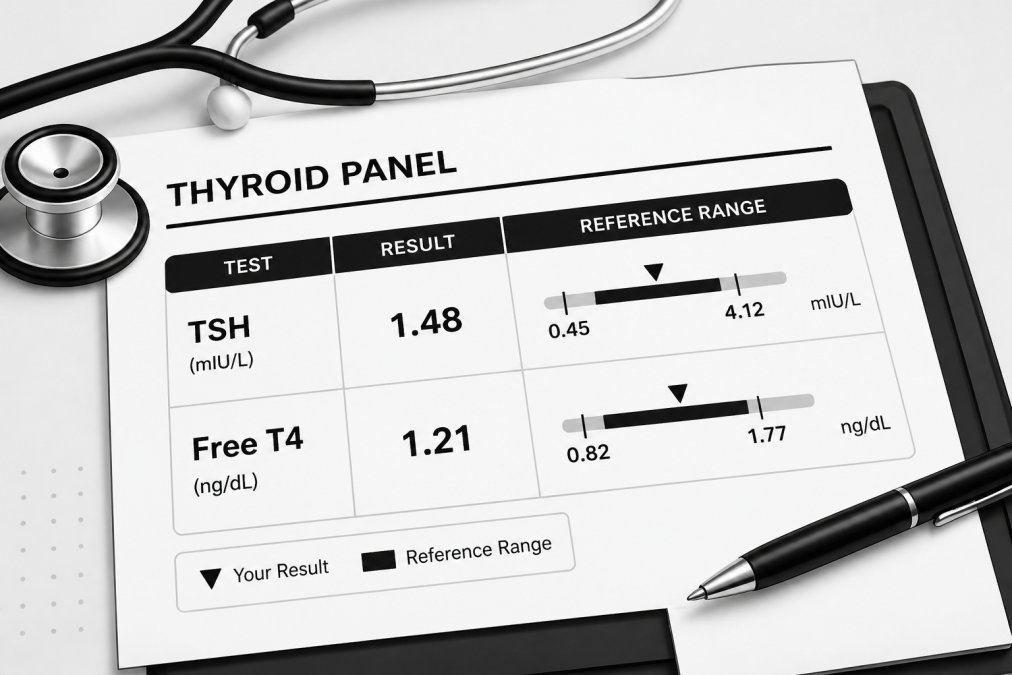
Your thyroid produces hormones that regulate metabolism, energy, and countless other functions. When doctors order thyroid labs, they're typically measuring TSH (thyroid-stimulating hormone) and Free T4 (thyroxine). TSH is produced by the pituitary gland and tells your thyroid how much hormone to make. Free T4 is the active thyroid hormone circulating in your blood. These two measurements form the backbone of standard thyroid testing.
The reference ranges used by most labs come from population averages, not from what makes people feel well. A typical TSH range might be 0.4 to 4.0 mIU/L, and Free T4 might be 0.8 to 1.8 ng/dL. If your numbers fall within these ranges, your lab report says "normal." But normal on paper doesn't always mean normal for you.
This is where the disconnect begins. The reference ranges were established by testing large groups of people and calculating the middle 95 percent of results. That means five percent of truly healthy people fall outside the range by definition. More importantly, the range includes people with undiagnosed thyroid disease, people on thyroid medication, and people who simply don't feel well. The range is statistical, not clinical.
At Thyroid Authority, we've worked with thousands of patients whose thyroid labs appeared normal while they experienced exhaustion, brain fog, and weight gain. Understanding how reference ranges work is the first step toward recognizing why your symptoms might be real even when your numbers look fine.
Why Standard Lab Ranges May Not Be Optimal for Your Health
The standard reference range for TSH is broad enough to encompass people with very different experiences. Someone at TSH 0.5 and someone at TSH 3.8 are both "normal," but they may feel completely different. Research suggests that people feel their best when TSH sits between 0.5 and 2.5 mIU/L, yet the standard range extends well beyond that.
Your body's needs are individual. Factors like age, sex, pregnancy status, medications, and underlying autoimmune disease all influence what an optimal range looks like for you specifically. A TSH of 3.5 might be fine for one person and problematic for another. The standard range doesn't account for this variation.
Many patients report that symptom improvement happens when their TSH drops into a narrower, more optimal range, even though their original lab work said "normal." This isn't imaginary. It reflects the difference between a population average and individual physiology. Your doctor may be reluctant to adjust medication when labs are technically normal, but functional medicine practitioners recognize that optimal health often requires optimization beyond the standard reference range.
The clinical context matters more than the number itself. If you have symptoms consistent with hypothyroidism, fatigue, cold intolerance, weight gain, hair loss, and your labs are at the high end of normal, that context changes the interpretation. You're not just looking at a number; you're looking at a number plus your lived experience.
Subclinical Hypothyroidism Symptoms: When Labs Miss What You Feel
Subclinical hypothyroidism is a state where your TSH is elevated (usually above 4.0) but your Free T4 remains normal. Many doctors don't treat this condition because technically, you still have adequate thyroid hormone in circulation. Yet patients with subclinical hypothyroidism often experience real symptoms: persistent fatigue, difficulty losing weight, mood changes, and cognitive fog.
The term "subclinical" is misleading. It doesn't mean your symptoms are imaginary or minor. It means the lab picture doesn't fully explain what you're experiencing. Your pituitary is working harder to maintain normal Free T4 levels, which is a sign that your thyroid is struggling. That struggle has consequences.
Some people progress from subclinical hypothyroidism to overt hypothyroidism over months or years. Others remain in this gray zone indefinitely, feeling unwell while their doctors say the labs don't warrant treatment. This is one of the most common scenarios where why thyroid labs appear normal becomes a critical question for patients seeking answers.
The symptoms of subclinical hypothyroidism overlap significantly with depression, anxiety, and burnout. Many patients are prescribed antidepressants or told to manage stress better before anyone considers that their thyroid might be the root cause. The thyroid connection is missed because the labs don't scream "problem."
Optimal vs Normal Thyroid Ranges: The Clinical Context Gap
There's a difference between "normal" and "optimal," and this gap explains much of the frustration patients feel. The standard reference range is designed to identify disease, not to optimize health. A TSH of 2.0 is normal, but is it optimal? For many people, yes. For others with specific symptoms or risk factors, a TSH closer to 1.0 might be where they feel best.
Optimal vs normal thyroid ranges also depend on your specific situation. If you have Hashimoto's disease or another autoimmune thyroid condition, your optimal TSH target might be different than someone without autoimmunity. If you're trying to conceive, your target range shifts again. If you're managing multiple autoimmune conditions, the picture becomes even more complex.
The clinical context gap is where functional medicine and standard endocrinology diverge. An endocrinologist might say "your TSH is normal, no treatment needed." A functional medicine doctor might say "your TSH is normal, but given your symptoms and your autoimmune history, let's optimize it to see if you feel better." Both approaches are looking at the same lab, but they're asking different questions.
This is why working with a provider who understands both the numbers and your complete clinical picture matters. They can help you determine whether your current range is truly optimal for your health goals and your quality of life.
The Role of Autoimmune Conditions in Thyroid Health
Hashimoto's disease is an autoimmune condition where your immune system attacks your thyroid tissue. Many people with Hashimoto's have normal TSH and Free T4 levels yet still experience symptoms. Why? Because autoimmune attack on the thyroid tissue causes inflammation and dysfunction that doesn't always show up as abnormal hormone levels.
The presence of thyroid antibodies, TPO (thyroid peroxidase) and thyroglobulin, indicates autoimmune activity even when hormone levels are normal. Standard labs often don't include antibody testing unless a doctor specifically orders it. Many patients discover they have Hashimoto's only after months or years of being told their thyroid labs are normal. The antibodies were never checked.
Autoimmune thyroid disease also increases the likelihood of other autoimmune conditions. If you have Celiac disease, Type 1 diabetes, or rheumatoid arthritis, your risk for autoimmune thyroid disease is higher. These conditions can overlap and complicate each other, making symptom management more difficult.
The endocrine system works as a network. When your thyroid is under autoimmune attack, your adrenal glands, pituitary, and metabolism all feel the effects. You might have normal thyroid hormone levels but still experience fatigue and brain fog because your entire endocrine system is inflamed and dysregulated. Standard labs measuring only TSH and Free T4 miss this systemic picture entirely.
Nutrient Deficiencies That Mimic Thyroid Dysfunction
Your thyroid needs specific nutrients to function properly: iodine, selenium, zinc, and iron are critical. If you're deficient in any of these, your thyroid can't produce or convert hormones efficiently. Yet standard thyroid testing never checks for these deficiencies. Your labs come back normal, but your thyroid is starving for the raw materials it needs.
Iron deficiency is particularly common in women and can cause fatigue, brain fog, and cold intolerance, symptoms that look identical to hypothyroidism. Selenium deficiency impairs the enzymes that convert T4 to T3, the active form of thyroid hormone your cells actually use. You might have normal T4 levels but insufficient T3 because you lack the nutrients needed for conversion.
Vitamin B12 deficiency produces fatigue and cognitive symptoms that mimic thyroid disease. Vitamin D deficiency is linked to autoimmune thyroid disease and can perpetuate symptoms even when thyroid hormones are adequate. Many patients discover that addressing these nutrient gaps resolves symptoms that persisted despite normal thyroid labs.
The relationship between nutrient status and thyroid function is one reason why functional medicine practitioners order more comprehensive testing. They're looking for the nutritional foundation that allows your thyroid to work properly. If that foundation is weak, no amount of thyroid hormone will fix the problem.
Functional Medicine Thyroid Testing Beyond Standard Labs
Standard thyroid testing typically includes TSH and sometimes Free T4. Functional medicine expands this picture significantly. Comprehensive thyroid testing includes Free T3 (the active form of thyroid hormone), reverse T3 (an inactive form that can block T3 action), and thyroid antibodies (TPO and thyroglobulin).
Free T3 is particularly important because it's the form your cells actually use. You could have normal TSH and Free T4 but low Free T3, meaning your body isn't converting T4 to T3 efficiently. This conversion requires adequate nutrients, healthy liver and gut function, and proper cortisol balance. Standard labs miss this conversion problem entirely.
Reverse T3 is an inactive form of thyroid hormone that increases during stress, poor sleep, and calorie restriction. High reverse T3 can block T3 receptors on your cells, making you feel hypothyroid even with normal hormone levels. This is another reason why why thyroid labs appear normal becomes the central question, the labs being ordered don't capture the complete hormone picture.
Testing thyroid antibodies reveals autoimmune activity. TPO antibodies are present in Hashimoto's disease and can be elevated even before TSH rises. Catching antibodies early allows for earlier intervention and potentially better outcomes. Yet many patients never get antibody testing because standard practice is to test TSH first and stop there if it's normal.
Thyroid Authority's approach incorporates comprehensive thyroid testing as part of understanding your complete endocrine picture. The EPIC Five Framework looks beyond isolated lab values to see how your thyroid, adrenal system, digestion, immune function, and lifestyle all interact to create your health experience.
Factors Outside the Thyroid Causing Similar Symptoms
Thyroid symptoms overlap significantly with other conditions. Chronic stress elevates cortisol, which causes fatigue, brain fog, and weight gain, identical to hypothyroidism. Sleep deprivation produces the same symptom picture. Chronic inflammation from gut dysbiosis, food sensitivities, or other sources creates fatigue and cognitive dysfunction that feels like a thyroid problem.
Anemia reduces oxygen delivery to your tissues, producing fatigue and cold intolerance. Vitamin deficiencies beyond those directly related to thyroid function, like B vitamins, magnesium, and vitamin D, cause fatigue and neurological symptoms. Depression and anxiety produce fatigue and cognitive symptoms. Hormonal imbalances from estrogen dominance or progesterone deficiency create weight gain and fatigue.
This is why comprehensive evaluation matters. Your symptoms might be thyroid-related, but they might also stem from adrenal dysfunction, gut health, nutrient status, sleep quality, stress management, or hormonal balance. A provider who only looks at thyroid labs will miss these other contributors.
The most common scenario is multi-factorial. You might have mild thyroid dysfunction plus nutrient deficiencies plus chronic stress plus poor sleep. Each factor alone might be manageable, but together they create significant symptoms. Addressing only the thyroid while ignoring the other factors leaves you partially improved at best.
How to Advocate for Yourself When Thyroid Labs Appear Normal

When your labs appear normal but you feel unwell, advocacy starts with preparation. Document your symptoms in detail: when they started, how they've progressed, what makes them better or worse. Write down your energy levels, sleep quality, weight changes, mood, cognitive function, and any other relevant patterns. Bring this documentation to your appointment.
Ask specifically for comprehensive thyroid testing. Request Free T3, reverse T3, and thyroid antibodies in addition to TSH and Free T4. Many doctors will order these tests if you ask directly. Explain that you want a complete picture, not just the standard screening. If your doctor refuses, ask why. Understanding their reasoning helps you decide whether to seek a second opinion.
Advocate for your clinical context. Tell your doctor how your symptoms affect your daily life. Explain that you understand your labs are normal but that you're struggling functionally. Ask whether your symptoms might warrant optimization of your thyroid levels even though they're technically normal. Some doctors are open to this conversation; others aren't. If your doctor dismisses your symptoms entirely, that's information worth noting.
Consider working with a functional medicine practitioner who specializes in thyroid and autoimmune disease. These providers are trained to look at the complete picture and to recognize why thyroid labs appear normal while patients suffer. Thyroid Authority offers a Complimentary Discovery Session where you can explore whether a comprehensive, physician-led approach might help you uncover root causes and restore your health.
Ask about nutrient testing. Request labs for iron, ferritin, B12, folate, vitamin D, selenium, and zinc. These nutrients are foundational for thyroid function and overall health. If deficiencies are present, addressing them can dramatically improve how you feel.
Keep records of everything: your symptoms, your lab results, your medications, your dietary changes, and how you feel over time. This documentation becomes invaluable if you're seeking a second opinion or working with a new provider. It demonstrates that your concerns are consistent and significant, not imaginary or exaggerated.
When your thyroid labs appear normal but you feel anything but normal, the answer isn't that nothing is wrong. The answer is that standard testing misses important pieces of your health puzzle. Whether it's nutrient deficiencies, autoimmune activity, hormonal imbalances, or the gap between "normal" and "optimal," comprehensive evaluation reveals what single lab values cannot.
Thyroid Authority's physician-led program is designed for exactly this situation. Working with doctors who have personally navigated thyroid dysfunction and who understand the limitations of standard testing, you can uncover root causes and build a sustainable path back to feeling like yourself. The EPIC Five Framework moves beyond symptom management to address the foundational systems that support thyroid health and overall vitality. If you've felt dismissed by conventional medicine, a Complimentary Discovery Session with Thyroid Authority can help you explore whether this comprehensive approach is right for your situation.
Barrier to Diagnosis | What It Means | Next Step |
|---|---|---|
Normal TSH, normal Free T4 | Labs miss subclinical disease, autoimmunity, or nutrient deficiency | Request comprehensive testing including Free T3, antibodies, and nutrient panels |
Elevated antibodies with normal hormones | Autoimmune attack present but hormones not yet depleted | Monitor closely; consider early intervention to prevent progression |
Normal labs plus persistent symptoms | Clinical context matters more than numbers alone | Work with a provider trained in functional medicine thyroid assessment |
Nutrient deficiencies not tested | Your thyroid can't function without raw materials | Request iron, B12, vitamin D, selenium, and zinc testing |
Reverse T3 not measured | Hormone conversion problems invisible to standard labs | Ask for comprehensive thyroid panel including reverse T3 |
Featured External Resources
According to the American Thyroid Association's patient education materials, understanding your thyroid lab results requires context beyond the numbers alone, particularly when symptoms persist despite normal screening tests.
Research from the American Board of Functional Medicine emphasizes that optimal thyroid function often requires a comprehensive assessment of nutrient status, immune function, and metabolic health, factors that standard TSH screening does not address.
The National Institutes of Health's overview of thyroid disease confirms that subclinical hypothyroidism and autoimmune thyroid disease can cause significant symptoms even when standard hormone levels remain within reference ranges, supporting the need for comprehensive evaluation when clinical suspicion is high.
Frequently Asked Questions
Can I have hypothyroidism with normal thyroid labs?
Yes. Your TSH and Free T4 may fall within standard reference ranges while you experience real hypothyroid symptoms. This happens because lab reference ranges are based on population averages, not optimal health markers. A TSH of 2.5 mIU/L is technically normal, but many patients feel symptomatic at this level. Functional medicine providers evaluate your clinical status alongside lab values—your fatigue, brain fog, and weight gain matter, even when numbers look normal on paper.
What are the limitations of standard TSH testing?
Standard TSH testing measures only one hormone from your pituitary gland. It doesn't assess Free T3, Free T4 conversion, thyroid antibodies, or how your cells actually respond to thyroid hormone. TSH also lags behind tissue-level thyroid function, so it can appear normal while your body struggles to convert T4 into usable T3. This is why many patients with normal TSH still feel exhausted and gain weight—the feedback loop isn't capturing the full picture of your endocrine system's performance.
Why do I still have thyroid symptoms when my labs are normal?
Your symptoms may stem from several sources beyond standard thyroid hormone levels. Nutrient deficiencies in iron, selenium, and zinc can block hormone conversion. Chronic stress elevates cortisol, which interferes with thyroid hormone metabolism. Autoimmune inflammation, medication interactions, and poor gut absorption of thyroid medication all trigger fatigue and brain fog despite normal lab work. Functional medicine thyroid testing expands beyond TSH to uncover these hidden drivers, which is why many patients finally feel better once root causes are identified.
What other factors influence thyroid hormone conversion?
Your liver, gut, and kidneys must convert T4 (the inactive form) into T3 (the active form your cells use). Stress, poor sleep, nutrient deficiencies, and inflammation all slow this conversion. Certain medications, including birth control and some antidepressants, also interfere. If your body can't convert T4 efficiently, you'll feel symptomatic even if Free T4 levels appear normal. This is why clinical correlation matters—your provider must ask about your stress, sleep, diet, and medications alongside your lab results.