 listicle
Best Functional Medicine Thyroid Programs 2026
Table of Contents
- What Makes a Functional Medicine Thyroid Program Worth Your Time
- How Functional Medicine Thyroid Specialist Online Services Differ from Conventional Care
- The Role of Functional Medicine Thyroid Lab Testing in Root Cause Discovery
- 1. Thyroid Authority: Physician-Led Root Cause Transformation
- 2. Modern Thyroid Clinic: Symptoms Beyond the Numbers
- 3. Colorado Center for Functional Medicine Essentials: 10-Month Intensive Program
- 4. Vytal Health: Ongoing Integrative Care with Built-In Support
- Root Cause Thyroid Treatment Programs: How to Choose What's Right for You
- Conclusion: Your Path to Reclaiming Your Thyroid Health
Last Updated: August 29, 2026
What Makes a Functional Medicine Thyroid Program Worth Your Time
Most people with thyroid dysfunction follow the same path: visit an endocrinologist, get lab work, receive a prescription, and leave feeling unheard. If your thyroid-stimulating hormone (TSH) falls within the conventional range, you're told everything is fine, even though you're exhausted, gaining weight, losing hair, and struggling with brain fog. Functional medicine thyroid programs differ fundamentally.
At Thyroid Authority, we've spent over two decades working with thousands of patients who felt dismissed by conventional care. The best functional medicine thyroid programs don't just manage symptoms, they investigate root causes. They look beyond a single lab marker to understand how your gut, adrenal system, immune response, and nutritional status interconnect with thyroid function.
The programs we cover in this guide share a common philosophy: moving beyond surface-level treatment to address autoimmune root causes, hormonal imbalance, and the lifestyle factors that perpetuate chronic illness. But they differ significantly in structure, duration, depth, and delivery model.
How Functional Medicine Thyroid Specialist Online Services Differ from Conventional Care
Conventional endocrinology focuses on one metric: TSH. If it's in range, treatment is considered successful, regardless of how you feel. Functional medicine thyroid specialists recognize that many people with Hashimoto's thyroiditis or hypothyroidism remain symptomatic despite "normal" lab results because conventional testing misses critical markers.

A functional medicine thyroid specialist online typically orders comprehensive lab testing that conventional doctors don't. Instead of checking only TSH, they measure free T3, free T4, reverse T3, thyroid peroxidase antibodies, thyroglobulin antibodies, and nutrient markers like selenium, zinc, iron, and B vitamins. These additional markers reveal whether your body is converting thyroid hormone properly, whether autoimmune inflammation is driving symptoms, or whether nutritional deficiencies are blocking recovery.
Where conventional care asks, "Is your TSH in range?", functional medicine asks, "Why do you still feel terrible?" This distinction shifts the entire treatment strategy. A functional medicine protocol addresses gut-thyroid axis dysfunction, reduces inflammatory triggers, restores nutrient status, and stabilizes the nervous system through lifestyle medicine. Virtual functional medicine thyroid programs make this approach accessible nationwide.
Dr. Rachel, Vice President of the American Board of Nutrition and active board member of the American Board of Functional Medicine, explains: "The missing piece in conventional care is identifying the nutritional components and nervous system dysregulation that perpetuate chronic illness. Most patients with Hashimoto's aren't just dealing with a thyroid problem, they're managing autoimmune dysfunction, often rooted in gut permeability, chronic stress, or undiagnosed nutrient deficiencies."
The Role of Functional Medicine Thyroid Lab Testing in Root Cause Discovery
Comprehensive thyroid testing separates functional medicine from conventional care. The difference isn't just ordering more tests, it's interpreting them using functional ranges rather than conventional "normal" ranges.
The Conventional Range Problem
Conventional medicine uses population-based reference ranges. For TSH, the typical range is 0.4-4.0 mIU/L, derived from a large population representing where 95% of people fall. But that 95% includes people with undiagnosed thyroid dysfunction and autoimmune disease. Functional medicine uses a narrower, more clinically relevant range. For TSH, many functional practitioners consider optimal to be 1.0-2.5 mIU/L because patients with TSH above 2.5 often experience fatigue, weight gain, and brain fog, even though conventional medicine says they're "normal (peer-reviewed research)."
The Core Thyroid Panel: What Gets Tested and Why
TSH (Thyroid-Stimulating Hormone) Conventional range: 0.4-4.0 mIU/L | Functional range: 1.0-2.5 mIU/L TSH is your pituitary's signal to your thyroid to produce hormone. High TSH means your pituitary is working hard to stimulate a sluggish thyroid. Functional medicine uses a tighter range because even "normal" TSH can coexist with symptoms if other markers are off.
Free T4 (Thyroxine) Conventional range: 0.8-1.8 ng/dL | Functional range: 1.0-1.5 ng/dL Free T4 is the active thyroid hormone your body can use. Many patients have low-normal free T4, which limits how much hormone is available for conversion to T3 (the more active form). Testing free T4 (not total T4) is critical because total T4 includes bound hormone your cells can't access.
Free T3 (Triiodothyronine) Conventional range: 2.3-4.2 pg/mL | Functional range: 3.5-4.2 pg/mL Free T3 is the most biologically active thyroid hormone, responsible for energy production, metabolism, and cognitive function. Many patients have normal TSH and free T4 but low free T3, indicating poor conversion from T4 to T3. This critical finding is often missed because conventional medicine doesn't test free T3. Low free T3 despite normal TSH and T4 suggests nutrient deficiency (selenium, zinc, iron), stress, or poor gut health, all addressable root causes (peer-reviewed research).
Reverse T3 (rT3) Conventional medicine: Rarely tests this | Functional range: Less than 15 ng/dL Reverse T3 is an inactive form of T3. When you're under chronic stress, have poor sleep, or are nutrient-deficient, your body converts T4 into reverse T3 instead of active T3. High reverse T3 is a major clue that stress management, sleep optimization, and adrenal support are needed.
Thyroid Antibodies: TPO and Thyroglobulin Conventional range: Negative (less than 35 IU/mL for TPO, less than 40 IU/mL for thyroglobulin) These antibodies indicate autoimmune thyroid disease (Hashimoto's). Functional medicine tests them to understand the degree of autoimmune activation and to monitor whether your protocol is reducing antibody levels. High antibodies indicate that immune modulation is needed, gut healing, food sensitivity elimination, stress management, and targeted supplementation.
Nutrient Markers: Iron, B12, Folate, Vitamin D, Selenium Thyroid hormone conversion and immune regulation depend on these nutrients. Iron deficiency blocks T4-to-T3 conversion. B12 and folate deficiency impair methylation, required for proper thyroid function. Vitamin D deficiency is linked to autoimmune thyroid disease (peer-reviewed research). Selenium is a cofactor for glutathione peroxidase, which protects the thyroid from oxidative damage. Functional medicine tests and prioritizes repletion before or alongside medication adjustments.
Additional Markers That Reveal Root Causes
Quality functional medicine programs also assess gut health markers (comprehensive stool analysis, food sensitivity testing, zonulin), inflammatory markers (high-sensitivity C-reactive protein, homocysteine, fasting glucose and insulin), and adrenal function (cortisol patterns, DHEA-S). These markers guide whether anti-inflammatory protocols, methylation support, metabolic intervention, or stress management is needed.
How Testing Guides Personalized Treatment
Three patients might all have hypothyroidism and normal TSH on medication, but their root causes differ completely. Patient A might have stress and poor sleep blocking T4-to-T3 conversion. Patient B might have nutrient deficiency and autoimmune activation. Patient C might have multiple issues: autoimmune activation, gut dysfunction, nutrient malabsorption, and methylation impairment. Without comprehensive testing, all three would receive the same treatment: a TSH-based medication adjustment. With comprehensive testing, each gets a personalized protocol addressing their specific root causes.
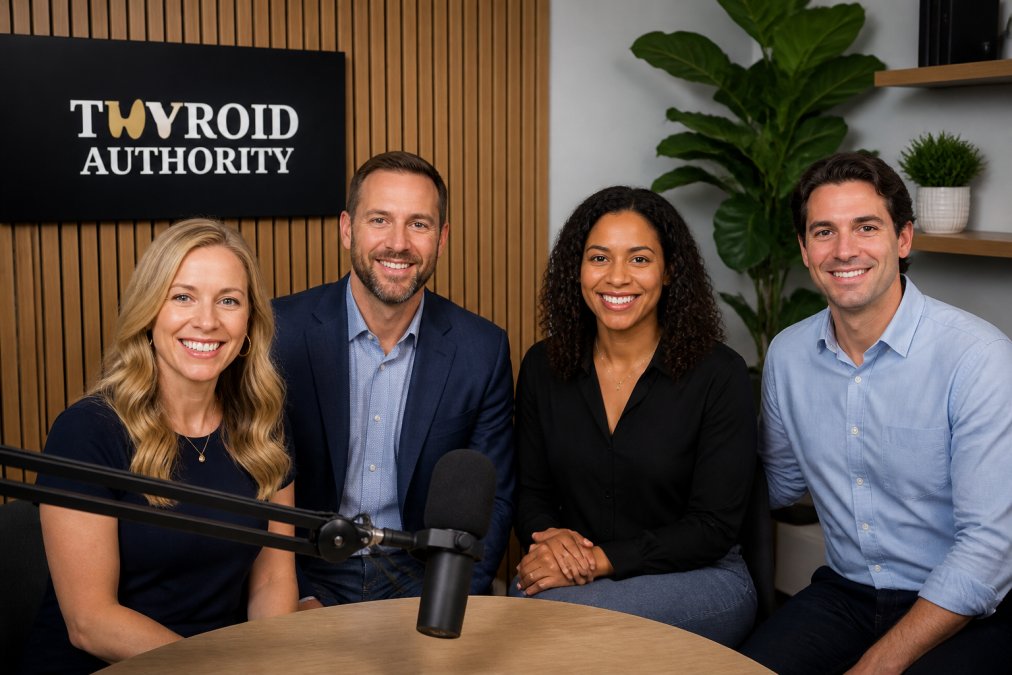
1. Thyroid Authority: Physician-Led Root Cause Transformation
Thyroid Authority stands apart because it's built on a framework developed through over two decades of measuring and refining thousands of patient outcomes. The program uses the proprietary EPIC Five™ Framework, a structured approach to identifying and addressing the five root cause categories that perpetuate thyroid and autoimmune dysfunction: energy, protein, inflammation, conversion, and immunity.
This is a 12-month physician-led virtual program. You work with doctors who have personally navigated thyroid dysfunction themselves, which changes how they approach your care. They understand what it feels like to be dismissed, to have normal lab results while feeling exhausted, to struggle with weight gain and brain fog despite medication.
The program structure is deliberate. Rather than sporadic consultations, you follow a guided 12-month transformation system. Comprehensive lab testing happens early to identify your specific root causes. From there, the EPIC Five™ Framework directs your treatment protocol, whether that's addressing gut dysbiosis, restoring nutrient status, managing autoimmune inflammation, optimizing hormone conversion, or stabilizing the nervous system.
Dr. Jason Bradley, Vice President of the American Board of Functional Medicine and active board member of the American Board of Nutrition, brings 26 years of thyroid and functional medicine expertise and has helped countless thousands of patients reclaim their health, happiness, and their lives. He's authored the 2023 International bestseller, The EPIC Five Plan: 5 Steps to Reclaiming Your Health and Vitality (https://amzn.to/4fTwSXk). Dr. Jason holds three doctorate degrees, a master's degree, and four board certifications. This isn't a generic telemedicine platform, it's a specialized program built by practitioners who've spent their careers solving exactly the problems you're facing.
Patients consistently report that Thyroid Authority's approach addresses what conventional care missed. One patient shared: "After years of being told my labs were normal, Thyroid Authority found I had severe gut dysbiosis and nutrient deficiencies driving my autoimmune response. Within six months of following the EPIC Five™ Framework, my antibodies dropped significantly and my energy returned."
2. Modern Thyroid Clinic: Symptoms Beyond the Numbers
Modern Thyroid Clinic takes the stance that lab numbers matter less than how you actually feel. Their model integrates traditional and functional medicine protocols, with particular emphasis on addressing patient symptoms that conventional medicine often overlooks.
The clinic specializes in thyroid and select endocrine disorders, offering virtual care nationwide. Their approach prioritizes listening to your symptom profile and designing treatment around what you're experiencing, not just what your labs show.
What works: Modern Thyroid Clinic's flexibility. They recognize that thyroid management isn't one-size-fits-all. Some patients need medication adjustments, others need lifestyle intervention, many need both.
Where it differs from Thyroid Authority: Modern Thyroid Clinic operates more as a consultation-based service rather than a structured transformation program. You get personalized care, but you're not guided through a proprietary framework designed to address root causes systematically. For patients who prefer flexibility and symptom-focused treatment over a defined 12-month protocol, this works. For those who want deep root cause investigation and structured accountability, Thyroid Authority's approach is more comprehensive.
3. Colorado Center for Functional Medicine Essentials: 10-Month Intensive Program
The Essentials Program is a 10-month intensive designed for people with long-standing health conditions, including thyroid dysfunction. This is a serious commitment, you're getting doctor visits, wellness coaching, and advanced lab assessments woven together.
The program includes visits with both doctors and wellness coaches who address food, sleep, breathwork, and exercise. This integrated approach recognizes that thyroid function depends on more than medication. Sleep quality, stress resilience, nutrient intake, and movement patterns all influence whether you recover.
What sets this apart: the wellness coaching component. Many functional medicine programs focus on medical testing and supplementation but miss the lifestyle medicine piece. Colorado Center integrates both. You get clinical expertise and behavioral support in a single program.
The limitation: this requires significant time commitment and coordination. If you're skeptical about whether 10 months will yield results, discuss outcomes and expectations before enrolling.
4. Vytal Health: Ongoing Integrative Care with Built-In Support
Vytal Health offers ongoing integrative and functional medicine care with monthly payments. The program includes private messaging with your doctor, a care coordinator to help navigate the system, discounts on supplements, and access to at-home lab testing kits.
This structure appeals to people who want continuous support without a fixed endpoint. Rather than a 12-month program with a defined conclusion, you maintain ongoing care as long as you're enrolled. The care coordinator is particularly valuable, they help you interpret results, coordinate with specialists, and troubleshoot obstacles.
What works: accessibility and flexibility. You can start, assess whether the approach is helping, and adjust without feeling locked into a long-term commitment.
What doesn't: the ongoing model means you're not working toward a defined endpoint or transformation, you're managing symptoms indefinitely, which differs from programs designed to achieve autoimmune remission or root cause resolution.
Root Cause Thyroid Treatment Programs: How to Choose What's Right for You
Choosing the right functional medicine thyroid program requires moving beyond marketing claims to evaluate clinical rigor. The following framework helps you distinguish high-quality, evidence-based programs from those simply repackaging conventional care with functional medicine language.

Criterion 1: Comprehensive Lab Testing Before Treatment Design
A red flag is any program that designs your treatment plan before ordering comprehensive testing. Quality programs always test first, then treat. Specifically, ask whether the program will order free T3 and free T4, reverse T3, TPO and thyroglobulin antibodies, complete iron panel, B12, folate, vitamin D, selenium, fasting glucose and insulin, inflammatory markers, and comprehensive stool analysis.
If a program says "we'll start with basic labs and adjust from there," they're not investigating root causes. The best programs recognize that thyroid dysfunction is rarely about the thyroid alone, it's about nutrient status, autoimmune activation, gut health, and metabolic function.
Criterion 2: A Named, Outcomes-Based Framework
Programs built on a proprietary framework backed by patient outcome data are more likely to produce consistent results than ad-hoc approaches. Ask: "What framework guides your treatment protocols?" A quality answer includes specifics about how the framework was developed, how long it's been refined, and what outcomes it's designed to achieve.
Thyroid Authority's EPIC Five™ Framework is based on over two decades of measuring and refining thousands of patient outcomes. The framework systematically addresses five root cause categories, energy, protein, inflammation, conversion, and immunity, which means every patient gets investigated across all five domains. This systematic approach reduces the chance that a critical root cause gets missed.
Criterion 3: Credentials That Matter for Thyroid Specifically
Look for board certification in functional medicine (through the American Board of Functional Medicine), board certification in clinical nutrition (through the American Board of Nutrition), published research or authored books on thyroid health, personal experience with thyroid dysfunction, and years of focused practice in thyroid and autoimmune conditions.
Dr. Jason Bradley exemplifies this standard with 26 years of thyroid and functional medicine expertise and authorship of the 2023 International bestseller The EPIC Five Plan: 5 Steps to Reclaiming Your Health and Vitality. Dr. Rachel brings over a decade and a half of clinical experience in nervous system regulation and identifying the nutritional components that perpetuate chronic illness, with her role as Vice President of the American Board of Nutrition and active board member of the American Board of Functional Medicine. These aren't generic credentials; they're specific to the problem you're solving.
**Criterion 4: Defined Success Metrics Beyond "How Do You Feel?"
Quality programs define success using objective lab markers. Before enrolling, ask what the program considers a successful outcome. The answer should include specifics like TPO antibodies reduced, reverse T3 normalized to a functional range, free T3 and free T4 optimized, nutrient markers restored to optimal levels, inflammatory markers reduced, and symptom resolution as a secondary outcome.
Criterion 5: Support Structure and Accountability
Thyroid recovery isn't linear. Quality programs include regular follow-up appointments, access to your doctor between appointments, a care coordinator or health coach to help navigate obstacles, clear protocols for what to do if you're not improving, and ongoing lab monitoring to track progress against defined metrics.
Criterion 6: Transparency on Duration and Commitment
Understand what you're signing up for. Structured programs (10-12 months) work best if you want intensive root cause investigation and a defined transformation. Ongoing subscription models work best if you want continuous support and flexibility without a fixed endpoint.
Criterion 7: Red Flags to Avoid
- Guaranteed outcomes: Recovery depends on your individual root causes, genetics, and commitment.
- One-size-fits-all protocols: If the program uses the same supplement list and dietary approach for every patient regardless of testing, they're not personalizing treatment.
- Dismissal of conventional medicine: Quality functional medicine programs integrate conventional and functional approaches.
- Lack of follow-up testing: Programs that don't retest after 6-8 weeks or 3-6 months aren't measuring whether their protocol is working.
- Vague pricing or hidden costs: Transparent programs disclose what's included and what costs extra.
The Bottom Line
The functional medicine thyroid programs worth your time share one conviction: your symptoms matter, but objective lab improvement is the proof. They investigate root causes systematically, define success using measurable markers, and provide ongoing support to help you achieve it. Use the criteria above to evaluate any program you're considering.
Conclusion: Your Path to Reclaiming Your Thyroid Health
The thyroid programs worth your time share one conviction: your symptoms matter more than your lab numbers. When conventional care dismisses you because your TSH is "normal," a quality functional medicine thyroid program investigates why you still feel terrible. They order comprehensive testing, identify root causes, and guide you through a structured protocol to restore function.
If you've exhausted traditional medical options and are ready for a comprehensive, physician-led approach, Thyroid Authority offers a 12-month virtual program designed specifically for this. Built on the EPIC Five™ Framework and led by doctors with personal thyroid health journeys, the program combines root cause investigation, personalized supplementation, lifestyle medicine, and ongoing support. Apply for a Complimentary Discovery Session at ThyroidAuthority.com to explore whether the program is right for your situation.
Frequently Asked Questions
Q: How is functional medicine thyroid lab testing different from what my conventional doctor orders?
A: Functional medicine thyroid lab testing goes beyond standard TSH screening to measure thyroid peroxidase antibodies, reverse T3, and T3/T4 conversion ratios. This comprehensive approach identifies autoimmune root causes and hormonal imbalances that conventional testing often misses. Many patients with normal TSH levels discover underlying Hashimoto's thyroiditis or nutrient deficiencies through functional testing, allowing doctors to address the actual problem instead of just the symptom.
Q: Can a functional medicine thyroid specialist online actually help if my in-person endocrinologist said my labs are normal?
A: Yes. A functional medicine thyroid specialist online uses a different framework: they evaluate symptoms alongside lab work and investigate root causes like gut-thyroid axis dysfunction, adrenal fatigue, and inflammation markers that standard endocrinology doesn't measure. Many patients who felt dismissed by conventional doctors find answers through virtual functional medicine programs because these specialists are trained to look at the whole picture, not just isolated numbers.
Q: What should I look for in a root cause thyroid treatment program?
A: Look for programs that include comprehensive lab testing (not just TSH), physician-led guidance, and a structured protocol addressing gut health, nutritional deficiencies, and lifestyle factors. The best root cause thyroid treatment programs track biomarkers over time, provide personalized supplement protocols, and focus on hormonal balance and endocrine system support. Verify that doctors have functional medicine training and experience with autoimmune thyroid conditions, not just general medicine.
Q: Are virtual functional medicine thyroid programs as effective as in-person care?
A: Virtual functional medicine programs are effective for thyroid management because the work happens primarily through detailed lab analysis, lifestyle coaching, and supplement protocols, not physical exams. Many patients prefer virtual care because it removes geographic barriers and often provides more time with the doctor than local clinics. Success depends on your commitment to the program and the doctor's expertise in functional medicine thyroid protocols, not the delivery method.
Your thyroid health doesn't have to remain a mystery. The right program, one that investigates root causes rather than just adjusting medication, can help you reclaim your energy, clarity, and life. Start by understanding your own needs, then match them to a program with the clinical depth and support structure to deliver results.
This article was written using GrandRanker
Frequently Asked Questions
Q: How is functional medicine thyroid lab testing different from what my conventional doctor orders?
A: Functional medicine thyroid lab testing goes beyond standard TSH screening to measure thyroid peroxidase antibodies, reverse T3, and T3/T4 conversion ratios. This comprehensive approach identifies autoimmune root causes and hormonal imbalances that conventional testing often misses. Many patients with normal TSH levels discover underlying Hashimoto's thyroiditis or nutrient deficiencies through functional testing, allowing doctors to address the actual problem instead of just the symptom.
Q: Can a functional medicine thyroid specialist online actually help if my in-person endocrinologist said my labs are normal?
A: Yes. A functional medicine thyroid specialist online uses a different framework: they evaluate symptoms alongside lab work and investigate root causes like gut-thyroid axis dysfunction, adrenal fatigue, and inflammation markers that standard endocrinology doesn't measure. Many patients who felt dismissed by conventional doctors find answers through virtual functional medicine programs because these specialists are trained to look at the whole picture, not just isolated numbers.
Q: What should I look for in a root cause thyroid treatment program?
A: Look for programs that include comprehensive lab testing (not just TSH), physician-led guidance, and a structured protocol addressing gut health, nutritional deficiencies, and lifestyle factors. The best root cause thyroid treatment programs track biomarkers over time, provide personalized supplement protocols, and focus on hormonal balance and endocrine system support. Verify that doctors have functional medicine training and experience with autoimmune thyroid conditions, not just general medicine.
Q: Are virtual functional medicine thyroid programs as effective as in-person care?
A: Virtual functional medicine programs are effective for thyroid management because the work happens primarily through detailed lab analysis, lifestyle coaching, and supplement protocols—not physical exams. Many patients prefer virtual care because it removes geographic barriers and often provides more time with the doctor than local clinics. Success depends on your commitment to the program and the doctor's expertise in functional medicine thyroid protocols, not the delivery method.