 Listicle
Best Supplements for Thyroid Conversion: What Works
Last Updated: November 3, 2026
Quick Summary
Thyroid conversion is the step where the body turns inactive T4 into active T3, mostly in the liver, gut and other tissues. Supplements can help when a specific gap, such as low selenium or zinc, is limiting that process. Testing should confirm a gap before you add anything.
- Selenium is the most studied nutrient for thyroid conversion, since it is required by the deiodinase enzymes.
- Zinc supports thyroid hormone receptors, and low zinc is common with restrictive diets or heavy alcohol use.
- Add up selenium from every product and check NIH upper intake limits before combining supplements.
- Iodine, iron and vitamin D should be supplemented only after blood or urine testing confirms a need.
- Separate minerals like iron, calcium and zinc from levothyroxine by at least four hours.
Table of Contents
- Why T4 Often Fails to Become Active T3
- Selenium and Zinc: The Core Conversion Nutrients
- Iodine, Iron and Vitamin D: Building Blocks and Cofactors
- Best Multivitamin for Thyroid Patients: Choosing a Base
- Comparing the Top Thyroid Conversion Supplements
- Thyroid Foods to Eat and Avoid Alongside Supplements
- How to Increase Thyroid Hormone Naturally Without Guesswork
- Drug-Nutrient Interactions and Lab Testing Before You Start
- Start Your Root-Cause Review With Thyroid Authority
- Frequently Asked Questions
Why T4 Often Fails to Become Active T3
Many adults have normal thyroid labs and still feel unwell. The reason often sits in the conversion step, where the thyroid releases inactive T4 and the body must turn it into active T3. Most of that conversion happens in the liver, gut and other tissues, through enzymes called deiodinases. When those enzymes lack the nutrients they need, T4 can build up while active T3 stays low.
This is why a standard thyroid panel can miss the problem. A TSH and total T4 result shows how much hormone is present, not how well the body is using it. Learn how to interpret your thyroid blood test results to see what your own levels suggest about conversion. Dr. Jason Bradley and Dr. Rachel, both of whom are part of the Thyroid Authority team, look at conversion as one piece of a larger picture that includes nutrient status, inflammation and stress load.
Several factors commonly slow conversion:
- Low selenium, zinc or iron
- Chronic stress that raises cortisol
- Gut inflammation that limits nutrient absorption
- Certain medications that interact with thyroid hormone or minerals
Supplements may help in some of these cases, but they work best when matched to a specific gap. Taking a long list of products without testing rarely helps and can create new problems. The sections below explain which nutrients matter most, how to think about a multivitamin, and what to discuss with a clinician before starting anything.
Selenium and Zinc: The Core Conversion Nutrients
Selenium is the most studied nutrient for thyroid conversion. It is a required component of the deiodinase enzymes that remove one iodine atom from T4 to create T3. Without enough selenium, the enzymes work less efficiently, and the body may hold more inactive T4 than it can use.
Zinc plays a supporting role. It helps regulate thyroid hormone receptors and supports the overall metabolic activity that depends on thyroid hormone. Low zinc is common in adults with restrictive diets, heavy alcohol use or gastrointestinal conditions that affect absorption.
Many people ask whether to take selenium and zinc together. In practice, they are often paired in a single product, but the doses should be considered separately. Selenium above recommended levels can cause toxicity, and high zinc can interfere with copper absorption. For this reason, the National Institutes of Health Office of Dietary Supplements publishes upper intake limits for both minerals, and we recommend checking those limits before combining products. NIH Office of Dietary Supplements selenium fact sheet
Watch out: stacking several selenium-containing products can push total intake past the upper limit without anyone noticing. Add up the selenium from every label before you start.
Iodine, Iron and Vitamin D: Building Blocks and Cofactors
Iodine, iron, and vitamin D each play distinct roles in thyroid hormone production and conversion, but they are not interchangeable. Understanding their specific mechanisms helps you avoid the common mistake of supplementing all three without testing.
Iodine is the raw material the thyroid uses to build T4 and T3. The thyroid traps iodide from the bloodstream and attaches it to thyroglobulin to create thyroid hormone. Iodine deficiency is uncommon in the United States because iodized salt is widely used, but some people eat very little salt or follow diets that exclude dairy and seafood. Explore the full guide to gut health and thyroid to see how digestion and absorption affect these nutrients. Iodine supplements are not a safe default. Excess iodine can worsen thyroid problems in people with Hashimoto's or existing nodules, and it can also temporarily inhibit thyroid hormone synthesis (the Wolff-Chaikoff effect). Testing and clinical guidance matter here more than with any other nutrient. A 24-hour urine iodine test can confirm deficiency before you consider supplementation.
Iron is a cofactor for thyroid peroxidase, the enzyme that attaches iodine to thyroglobulin. Low ferritin (stored iron) can therefore limit hormone production. Iron also supports the deiodinase enzymes that convert T4 to T3, though the evidence for this role is less direct than for selenium. Iron levels should be confirmed by blood work before supplementing, because iron can accumulate in people who do not need it and cause organ damage. A ferritin level below 30 ng/mL is a common threshold for considering iron supplementation, but your clinician may use a different cutoff based on your symptoms and history.
Vitamin D affects immune regulation and is often low in people with autoimmune thyroid disease. It does not directly convert T4 to T3, but correcting a deficiency is commonly part of a broader plan because low vitamin D is associated with increased thyroid antibody levels in some studies. For most adults, maintenance doses are set by clinical guidance and blood levels of 25-hydroxyvitamin D.
Watch out: taking iron and calcium supplements at the same time can reduce absorption of both minerals. Separate them by at least two hours, and take iron with vitamin C to enhance uptake.
Bioavailability varies significantly between forms. For iron, bisglycinate and ferrous sulfate are absorbed differently; bisglycinate is gentler on the stomach but may require a higher dose to achieve the same effect. For vitamin D, D3 (cholecalciferol) is generally more effective at raising blood levels than D2 (ergocalciferol). These differences matter when you are trying to correct a deficiency efficiently.
Best Multivitamin for Thyroid Patients: Choosing a Base
For many people, a well-formulated multivitamin is a practical starting point because it covers several nutrients at moderate doses. The goal is a base product, not a stack of high-dose single nutrients layered on top.
When evaluating a multivitamin for thyroid support, look for:
- Selenium and zinc in amounts close to daily recommended intakes
- Methylated B vitamins if you have a documented absorption issue
- No iodine unless your clinician has confirmed you need it
- Third-party testing from a recognized certifier
- A short ingredient list without unnecessary fillers
Taking a multivitamin does not replace testing. If you have symptoms that persist after several months of a basic nutrient plan, the next step is a more detailed review with a clinician who reads full thyroid panels and nutrient markers.
Comparing the Top Thyroid Conversion Supplements
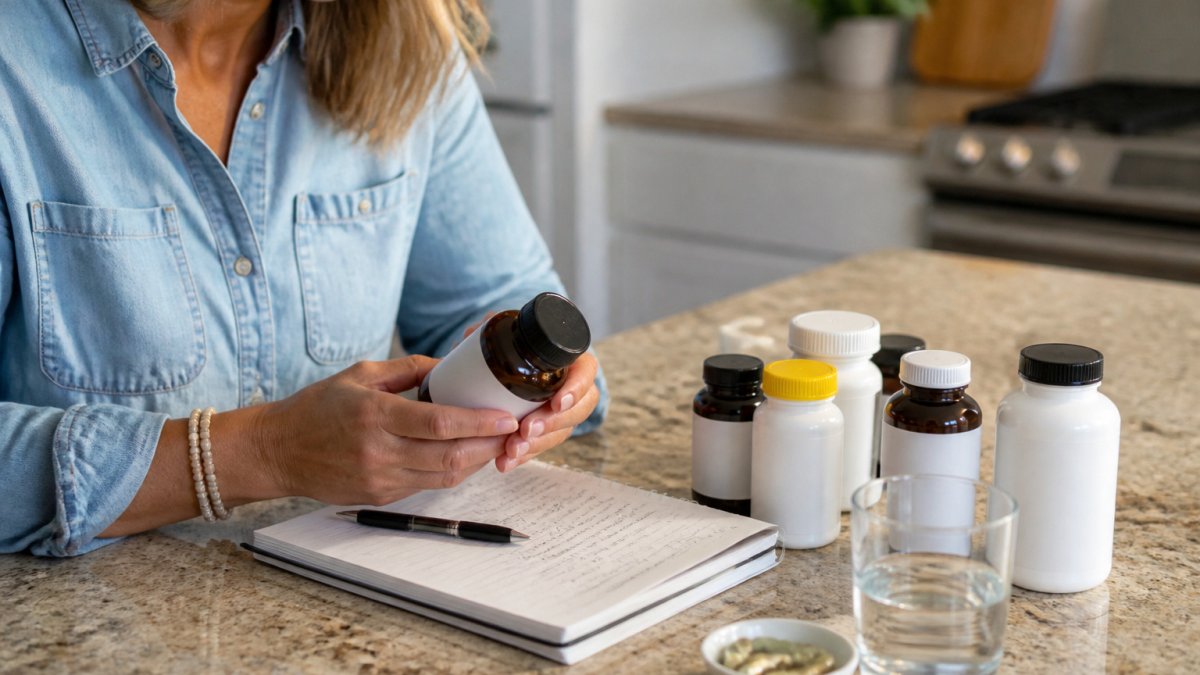
!A woman in her 40s reviewing supplement bottles and a notepad on a kitchen counter in natural morning light
| Supplement | Main Role | Starting Price | Best For | Main Caution |
|---|---|---|---|---|
| Dr. Westin Childs T3 Conversion Booster | T4 to T3 conversion support | $44.97 | Targeting conversion specifically | Higher price than single nutrients |
| Thorne Research Selenium | Deiodinase cofactor | $15.00 | Optimizing enzyme activity | Dosing must stay within limits |
| Pure Encapsulations Zinc 30 | Zinc status | $18.60 | Confirmed zinc gaps | Nausea on an empty stomach |
| Life Extension Magnesium Citrate | Mineral balance | $10.50 | Overall mineral support | Large capsule size |
| NOW Foods Vitamin D3 | Vitamin D repletion | $12.99 | Confirmed deficiency | Needs a fat-containing meal |
| Gaia Herbs Ashwagandha Root | Stress-related support | $24.99 | Chronic stress affecting conversion | Not for nightshade sensitivities |
| Seeking Health Optimal Iron | Iron repletion | $29.95 | Confirmed iron deficiency | Only with blood test confirmation |
| Nature's Way Kelp | Natural iodine | $8.99 | Confirmed iodine deficiency | Excess iodine can harm thyroid |
| Jarrow Formulas B-Right | B-vitamin support | $16.95 | Metabolic energy support | Yellow urine from riboflavin |
Thyroid Foods to Eat and Avoid Alongside Supplements
Food shapes how well supplements work. Selenium is found in Brazil nuts, seafood, eggs and whole grains. Zinc comes from oysters, beef, pumpkin seeds and legumes. Iron is found in lean red meat, lentils and spinach, though plant iron is absorbed less efficiently. Eating these foods regularly often covers much of what a basic supplement provides.
Some foods can interfere with absorption or thyroid function when eaten in large amounts or at the wrong time:
- Raw cruciferous vegetables like broccoli and kale, in very large quantities
- Soy products taken within a few hours of thyroid medication
- High-fiber meals taken at the same time as levothyroxine
- Coffee and calcium-rich foods taken with medication
For people taking thyroid medication, timing matters. Levothyroxine is usually taken on an empty stomach, and minerals such as iron, calcium and zinc can reduce its absorption if taken together. A common approach is to separate them by at least four hours. Confirm the schedule with your prescriber.
Dietary sources are generally safer than high-dose supplements, but they also vary. Supplementation makes sense when testing shows a gap, or when diet cannot realistically provide enough of a nutrient.
How to Increase Thyroid Hormone Naturally Without Guesswork
Many people search for ways to increase thyroid hormone naturally. The most reliable approach is to address the factors that limit production and conversion, rather than trying to push hormone levels up directly. Raising thyroid hormone without a diagnosis can carry risks, so the right approach depends on individual testing and medical guidance.
A practical sequence looks like this:
- Review your current labs, including TSH, free T4, free T3 and relevant antibodies
- Check nutrient markers such as ferritin, vitamin D and, where available, selenium
- Assess sleep, stress, digestion and medication timing
- Make dietary changes that cover known gaps
- Add supplements only where a specific need is identified
- Retest after a defined period, typically three months, and adjust
Stress deserves particular attention. Chronic stress raises cortisol, which can reduce conversion of T4 to T3 and increase reverse T3. Gentle, consistent strategies such as regular sleep, daily walks and breathing practices tend to matter more than any single product. Ashwagandha is sometimes used for stress support, but it is not appropriate for everyone and can affect thyroid hormone levels, so discuss it with a clinician first.
The real answer to "natural" is not guessing. It is measuring, adjusting and rechecking.
Drug-Nutrient Interactions and Lab Testing Before You Start
Supplements can change how thyroid medication works, and the timing of when you take them matters as much as the dose. For personalized guidance on medications, supplements and lab testing, you can apply for a discovery call. Most guides list interactions but stop short of telling you exactly how to space them. Here is a practical timing guide based on common clinical practice.
Levothyroxine should be taken on an empty stomach, typically 30-60 minutes before breakfast. Calcium, iron, magnesium, zinc, and high-dose fiber can all reduce levothyroxine absorption if taken too close together. A common approach is to separate these minerals from your thyroid medication by at least four hours. For example, if you take levothyroxine at 7 a.m., wait until 11 a.m. or later to take a calcium or iron supplement. Some clinicians recommend taking minerals with dinner to simplify the schedule. Selenium and iodine can shift thyroid function in ways that matter for people on medication, so discuss any new supplement with your prescriber before adding it.
Lab testing for conversion is more specific than a standard panel. Free T4, free T3, and reverse T3 together show a clearer picture than TSH alone. Free T4 reflects the amount of hormone available for conversion. Free T3 shows how much active hormone is present. Reverse T3 is an inactive form that can block T3 receptors; a high reverse T3 relative to free T3 may suggest that conversion is being diverted toward the inactive pathway, often due to stress, inflammation, or nutrient deficiencies. Nutrient markers such as ferritin, vitamin D, and selenium (measured via serum selenium or glutathione peroxidase activity) help identify specific gaps. Interpreting these results requires context, including symptoms, medication history, and autoimmune status. Tests that look abnormal in isolation may be normal once the full picture is considered.
Bioavailability also varies. A nutrient in a highly absorbable form may work better at a lower dose than a cheaper form at a higher dose. For example, selenomethionine is generally better absorbed and retained than sodium selenite, and zinc picolinate tends to be more bioavailable than zinc oxide. Ask your clinician or pharmacist which forms are appropriate for your situation.
If you are taking medication, do not stop or change it because of a supplement plan without medical guidance. Thyroid medication adjustments should be made under supervision with follow-up labs. A typical retesting interval is six to eight weeks after a dose change, or three months after starting a new supplement regimen.
Start Your Root-Cause Review With Thyroid Authority
Supplements are one tool among several. Thyroid Authority offers a physician-led, 12-month virtual program built around the EPIC Five Framework, which looks at root causes rather than symptoms alone. Dr. Jason Bradley and Dr. Rachel are associated with the program.
If you have normal labs but still feel tired, foggy or unlike yourself, a structured review may help identify what is limiting conversion and what to do next. You can start with a complimentary discovery session at Thyroid Authority's booking page, where the team can discuss your history and whether the program fits your needs. Apply to start your root-cause review with Thyroid Authority and get a clearer plan for your thyroid health.
Frequently Asked Questions
What is the best supplement for T4 to T3 conversion?
No single supplement reliably fixes conversion, because the process depends on several nutrients working together. Selenium is the most studied cofactor, since deiodinase enzymes that convert T4 to T3 contain selenium. Zinc, iron and iodine also play supporting roles. Before choosing any product, have your clinician review your labs, current medications and diet, and confirm which nutrients are actually low. Supplements taken without that check can interfere with thyroid medication or push levels too far in either direction.
Can selenium help with thyroid hormone conversion?
Selenium is a required component of the deiodinase enzymes that convert inactive T4 into active T3, so it is a logical nutrient to evaluate. Many people get enough from a varied diet, and excess selenium carries its own risks, including toxicity at high intakes. Ask your clinician whether a selenium level test or a supplement fits your situation, and keep to the dose they recommend rather than stacking several selenium-containing products.
Can supplements interfere with thyroid medication?
Yes. Iron, calcium, magnesium and some multivitamins can reduce absorption of levothyroxine when taken at the same time. Separating doses by several hours is a common approach, but the right timing depends on your medication and other supplements. Tell your prescriber about everything you take, and recheck thyroid labs after any change to your supplement routine.