 listicle
5 Best Practices for At-Home Thyroid Testing in 2026
Table of Contents
- How At-Home Thyroid Testing Works
- Quick Comparison: Top At-Home Thyroid Test Kits
- Best Practice 1: Time Your Test to Your Circadian Rhythm
- Best Practice 2: Prepare Correctly With Fasting and Medication Timing
- Best Practice 3: Collect Your Sample Without Pre-Analytical Errors
- At-Home Thyroid Test Accuracy: What the Evidence Shows
- Interpreting Thyroid Blood Test Results in Context
- How to Improve Thyroid Function After Your Results
- Frequently Asked Questions
Last Updated: September 12, 2026
How At-Home Thyroid Testing Works
At-home thyroid testing is the practice of collecting a small blood sample yourself and mailing it to a certified lab for analysis of thyroid hormones and antibodies. This guide from Thyroid Authority breaks down the five best practices for at home thyroid testing so your results are accurate and actionable. The process is straightforward: order a kit, collect your sample, ship it back, and receive physician-reviewed results. Maintaining consistency in your health monitoring requires similar diligence across different metrics, as accurate home testing remains a cornerstone of proactive wellness whether you are tracking hormone levels or checking blood pressure accurately at home.
Most kits on the market use one of two collection methods, and the method affects both comfort and accuracy.
Finger-Prick vs. Venipuncture Collection
Finger-prick collection uses a small lancet to draw a few drops of blood from your fingertip, which you catch in a collection tube or on a dried blood spot card. It is non-invasive, quick, and can be done at home without a phlebotomist. Venipuncture, by contrast, draws blood from a vein and requires a trained professional, usually at a lab or draw site.
Finger-prick kits win on convenience. Venipuncture wins on sample volume, which matters when a panel includes multiple biomarkers. The trade-off is real: a finger-prick sample is more sensitive to collection errors, so technique matters more than it does at a draw site.
Quick Comparison: Top At-Home Thyroid Test Kits
At-home thyroid kits differ mainly in which biomarkers they measure, how the sample is collected, and whether a physician reviews the result. Hormone-only kits check TSH, free T3, and free T4. Antibody-inclusive kits add thyroid peroxidase (TPO) antibodies, which matter if you are trying to rule out Hashimoto's or another autoimmune cause. A third category, physician-led programs, pairs a broader panel with a clinical review of the full pattern.
| Kit Type | Typical Biomarkers | Collection Method | Best For |
|---|---|---|---|
| Hormone-only | TSH, Free T3, Free T4 | Finger-prick | Baseline hormone check |
| Antibody-inclusive | TSH, T3, T4, TPO antibodies | Finger-prick or dried blood spot | Ruling out autoimmune disease |
| Expanded panel | Above plus reverse T3, thyroglobulin antibodies | Dried blood spot | Complex or persistent symptoms |
| Physician-led program | Root-cause panel with clinical review | Finger-prick plus intake | Symptomatic patients with "normal" labs |
How to Choose a Kit
Three questions separate a useful kit from a wasted one.
1. Does the panel include antibodies? A single TSH reading tells you very little on its own. If you have symptoms and normal TSH, an antibody-inclusive panel is the more useful starting point. TPO antibodies can be elevated for years before hormone levels shift, and that early signal is what distinguishes autoimmune thyroid disease from other causes.
2. Is the lab CLIA-certified? Look for CLIA-certified laboratory processing on the kit's documentation. A kit that ships to an uncertified lab is not a diagnostic tool, no matter how polished the app is.
3. Does a physician review the result? Some kits return a PDF with numbers and a reference range. Others include a clinician who reads the full pattern and flags what needs follow-up. If you have symptoms and a history of being told everything looks fine, the second option saves you a step.
A common pattern is a patient who orders a hormone-only kit, gets a normal TSH, and stops there, when an antibody-inclusive panel would have shown active autoimmune disease. If your symptoms are real, match the panel to the question you are asking.
Best Practice 1: Time Your Test to Your Circadian Rhythm
Thyroid-stimulating hormone (TSH) follows a circadian rhythm, meaning it fluctuates predictably across the day. TSH peaks in the early morning hours and drops through the afternoon, so a sample drawn at 8 a.m. and one drawn at 4 p.m. can produce meaningfully different numbers (peer-reviewed research). Standard reference ranges assume a morning draw.
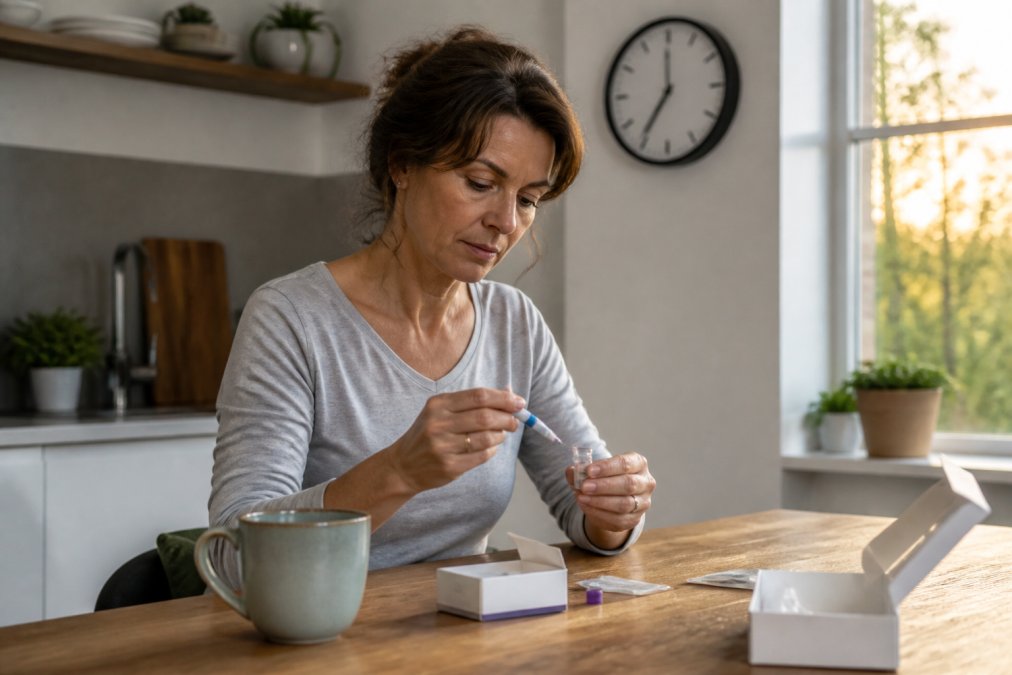
The practical rule: collect your sample within one to two hours of waking, and keep that window consistent across every test you take. If you test at 7 a.m. in January, test at 7 a.m. in June. Consistency is what makes two results comparable.
Best Practice 2: Prepare Correctly With Fasting and Medication Timing
Fasting is not strictly required for a thyroid panel, but it removes a variable. Biotin supplements are the bigger issue: they can interfere with many immunoassay-based lab tests, including thyroid hormone assays, and the interference can push results in either direction. Most labs recommend stopping biotin two to three days before collection.
Medication timing deserves equal attention. If you take levothyroxine, taking it before your draw can inflate your free T4 reading. If you take liothyronine (T3), it can skew your free T3. The general guidance is to draw before your morning dose and to note your last dose time on the requisition form.
Best Practice 3: Collect Your Sample Without Pre-Analytical Errors
Most inaccurate at-home results trace back to pre-analytical variables: the steps taken before the sample ever reaches the lab. A common mistake is milking or squeezing the fingertip to force blood out. That pressure dilutes the sample with interstitial fluid, which can lower measured hormone concentrations.
Follow these steps for a clean finger-prick sample:
- Hydrate well the day before; dehydration thickens blood and slows flow
- Warm your hands under running water for a minute before collection
- Clean the fingertip with the alcohol wipe and let it air dry completely
- Use the side of the fingertip, not the center pad, where nerve endings are denser
- Let blood drip freely into the tube; do not squeeze the finger
- Fill to the marked line, cap the tube, and invert it gently as instructed
- Label the tube with the date and time of collection
- Ship the same day, using the prepaid label, and avoid collecting on a Friday if weekend transit delays are likely
If flow stalls, warm the hand again and massage from the palm toward the fingertip rather than pinching at the puncture site.
At-Home Thyroid Test Accuracy: What the Evidence Shows
At-home thyroid test accuracy depends far more on collection technique, medication timing, and lab certification than on the kit brand. Look for CLIA-certified laboratory processing on the kit's documentation; CLIA certification is the standard the Centers for Medicare & Medicaid Services sets for clinical laboratories. A kit that ships to an uncertified lab is not a diagnostic tool, no matter how polished the app is.
Two factors separate a reliable result from a misleading one. First, sample quality: a hemolyzed or underfilled tube can be rejected or produce skewed values. Second, assay method: different labs use different platforms, and reference ranges are platform-specific. This is why comparing a result from one lab against a range from another lab is a recipe for confusion.
Medication and Supplement Interference
Most articles stop at "follow the instructions." The bigger accuracy threats are what you put in your body before the draw.
Biotin. Biotin supplements interfere with many immunoassay-based lab tests, including thyroid hormone assays, and the interference can push results in either direction, a falsely high or falsely low reading depending on the assay platform. Most labs recommend stopping biotin two to three days before collection. If you take a hair, skin, and nails supplement or a B-complex, check the label; biotin is often dosed at 5,000 to 10,000 mcg, well above the level that causes interference.
Levothyroxine (T4). Taking your dose before the draw can inflate your free T4 reading. The general guidance is to draw before your morning dose and note your last dose time on the requisition form.
Liothyronine (T3). T3 medication has a shorter half-life and can skew free T3 for hours after a dose. Timing matters more here than with T4.
Other medications. Estrogen-containing birth control and hormone therapy can raise thyroid-binding globulin and shift total hormone levels. Biotin, corticosteroids, and some seizure medications can also affect results. Tell the reviewing clinician about everything you take, including over-the-counter supplements.
Troubleshooting a Failed Finger-Prick
Even with good technique, finger-prick collection sometimes stalls. Here is what to do when it does.
- Blood stops flowing mid-collection. Warm the hand again under running water for a full minute, then massage from the palm toward the fingertip. Do not pinch or milk the puncture site, that dilutes the sample with interstitial fluid.
- The tube is underfilled. Do not top it off with a second puncture from a different finger unless the kit instructions allow it. Underfilled tubes are a leading cause of rejected samples. Contact the kit's support line; most replace the collection materials at no charge.
- You cannot get a drop at all. Stay hydrated, warm the hand, and try the side of a different fingertip. If two attempts fail, stop and request a replacement kit rather than forcing a marginal sample.
- The blood spot card is smeared or layered. Dried blood spot cards require a single, saturated drop that soaks through. Layered spots can produce unreliable results. Request a new card.
A result is only as good as its reference range. Always interpret your numbers against the range printed on your own report, not a range you found online. And if a result looks wildly off from how you feel, that is a signal to retest under better conditions before acting on it.
Interpreting Thyroid Blood Test Results in Context
Interpreting thyroid blood test results means reading the panel as a system, not as isolated numbers. TSH is a pituitary signal, not a thyroid hormone. Free T4 and free T3 are the hormones your cells actually use. TPO antibodies indicate an autoimmune process is present, regardless of where your hormone levels sit.
The pattern matters more than any single value:
- High TSH with low free T4 points toward an underactive thyroid
- Low TSH with high free T4 or free T3 points toward an overactive thyroid
- Normal hormones with elevated TPO antibodies suggests autoimmune thyroid disease without overt hormone dysfunction yet
That third pattern is the one most often missed. A patient can have a "normal" TSH and free T4 and still have active Hashimoto's driving fatigue, brain fog, and weight changes. The American Thyroid Association's patient resources note that antibody testing is what distinguishes autoimmune thyroid disease from other causes of hypothyroidism.
How to Improve Thyroid Function After Your Results
How to improve thyroid function starts with knowing which pattern you are treating, because the levers differ. For autoimmune-driven disease, the goal is reducing the triggers that keep your immune system activated. For medication-managed hypothyroidism, the goal is optimizing dose timing, nutrient status, and the factors that affect absorption.
A post-result action plan looks like this:
- Share your results with a physician who will read the full panel, not just TSH
- Track symptoms against your numbers for two to four weeks
- Address nutrient gaps that affect thyroid conversion, including selenium, iron, and vitamin D, under professional guidance
- Review medication timing and absorption with your prescriber
- Retest on a consistent schedule so trends, not snapshots, guide decisions
This is the point where most people hit a wall. They have the numbers, they have symptoms, and their clinician tells them everything looks fine. Thyroid Authority was built for exactly that gap: a physician-led, 12-month virtual program that uses the EPIC Five™ Framework to find root causes rather than manage surface symptoms. The program is led by doctors who have navigated their own thyroid dysfunction, and it has helped thousands of patients restore energy and clarity. If you have been dismissed with normal labs, a complimentary Discovery Session is a low-pressure way to get a second read on your results.
Frequently Asked Questions
What can throw off a thyroid test?
Several factors can skew results. Taking biotin supplements within 48 hours of testing is a common culprit, as biotin interferes with many immunoassays. Timing matters too: TSH follows a circadian rhythm and peaks overnight, so a late-afternoon draw can read lower than a morning one. Recent illness, acute stress, and certain medications like steroids or estrogen can also shift thyroid hormone levels. For accurate at-home thyroid testing, collect your sample at the same time of day each time and pause biotin beforehand.
How accurate are at-home thyroid test kits?
Accuracy depends largely on lab certification and sample quality. Kits processed by CLIA-certified laboratories using finger-prick serum collection generally produce results comparable to traditional venipuncture for TSH, free T4, and free T3. The larger variable is pre-analytical error: inadequate blood volume, delayed shipping, or improper handling can invalidate a sample. Following kit instructions precisely, hydrating before collection, and mailing your sample the same day it is collected all improve reliability. No home test replaces a clinical diagnosis from a physician.
When is the best time of day to take a thyroid blood test?
Early morning, ideally within one to two hours of waking, is the standard recommendation. TSH levels peak between 2 a.m. and 4 a.m. and decline through the day, so a morning collection captures the highest and most consistent reading. If you take thyroid medication, collect your sample before your daily dose, since levothyroxine can temporarily suppress TSH. Testing at the same time on each occasion makes your results easier to compare over months.
Do at-home thyroid tests provide a comprehensive diagnosis?
No. At-home kits measure biomarkers like TSH, free T4, free T3, and sometimes TPO antibodies, but a diagnosis requires clinical context: your symptoms, medical history, physical exam, and often imaging. Results outside the reference range do not automatically mean disease, and results inside it do not rule out a thyroid problem, especially if you have Hashimoto's. Use home testing for monitoring and trend tracking, then bring your results to a physician for interpretation and any treatment decisions.
How should I prepare for an at-home thyroid collection?
Plan your collection for early morning before eating or taking thyroid medication. Drink water beforehand to make the finger-prick easier, and warm your hands to improve circulation. Avoid biotin supplements for at least 48 hours. Have your kit laid out with the lancet, collection tube, and shipping materials ready before you start. Fill the tube to the marked line, since underfilled samples are the most common reason labs reject a specimen. Ship the sample the same day using the prepaid label.
Getting accurate numbers is only half the battle. The harder part is finding someone who will interpret the full pattern, connect it to your symptoms, and build a plan that addresses the cause instead of the lab value. Thyroid Authority pairs physician-led care with the EPIC Five™ Framework, a 12-month structured program, and a root-cause approach designed for people whose labs look "normal" but who still feel unwell. Get started with Thyroid Authority and take back control of your health.