 ultimate-guide
How to Improve Thyroid Function: A Practical Guide
Table of Contents
- Signs of Thyroid Dysfunction You Should Not Ignore
- Essential Micronutrients That Support Thyroid Function
- Foods to Avoid for Hypothyroidism and Autoimmune Thyroiditis
- Best Supplements for Thyroid Health: What Helps and What to Watch
- How to Improve Thyroid Function Through Lifestyle Changes
- Environmental Endocrine Disruptors and Drug-Nutrient Interactions
- Post-Diagnostic Lifestyle Maintenance for Long-Term Thyroid Health
- Moving Beyond Symptom Management to Root-Cause Care
Last Updated: August 4, 2026
Thyroid dysfunction affects millions of Americans, yet the gap between "normal" lab results and genuinely feeling well remains vast. Improving thyroid function requires understanding nutrition, lifestyle, environmental exposures, and the complex interplay between your endocrine system and immune response. This guide covers what your symptoms are telling you, which nutrients matter most, and the daily habits that create lasting change.
Most thyroid guides treat the condition as a single-variable problem: fix iodine, feel better. The reality is that thyroid function sits at the intersection of gut health, cortisol regulation, sleep quality, toxic load, and autoimmune activity. The strategies below address all of it.
Signs of Thyroid Dysfunction You Should Not Ignore
Thyroid dysfunction occurs when the thyroid gland produces too much or too little hormone, disrupting metabolism, mood, energy, and nearly every organ system. Hypothyroidism, the most common presentation in the US, causes fatigue, weight gain, hair loss, depression, and brain fog.
Signs worth taking seriously include persistent fatigue unimproved by rest, unexplained weight gain despite consistent diet and exercise, cold intolerance, dry skin, brittle nails, hair thinning at the outer eyebrows, constipation, depression or mood instability, and brain fog.
When Labs Look Normal but Symptoms Persist
A TSH level within the lab's reference range does not mean your thyroid is functioning optimally for your body. Reference ranges are population averages, not individual targets. Many clinicians do not routinely test free T3, free T4, or thyroid peroxidase antibodies, meaning autoimmune thyroiditis can go undetected for years.
According to the American Thyroid Association's clinical guidelines, subclinical hypothyroidism is common and often symptomatic even when TSH falls within range. If symptoms persist despite "normal" thyroid function tests, the problem may be conversion failure, nutrient deficiency, or an active autoimmune process that standard panels do not capture.
Essential Micronutrients That Support Thyroid Function
The thyroid depends on specific micronutrients to synthesize and convert hormones. Deficiency in any of them can impair thyroid function even when the gland itself is structurally intact.
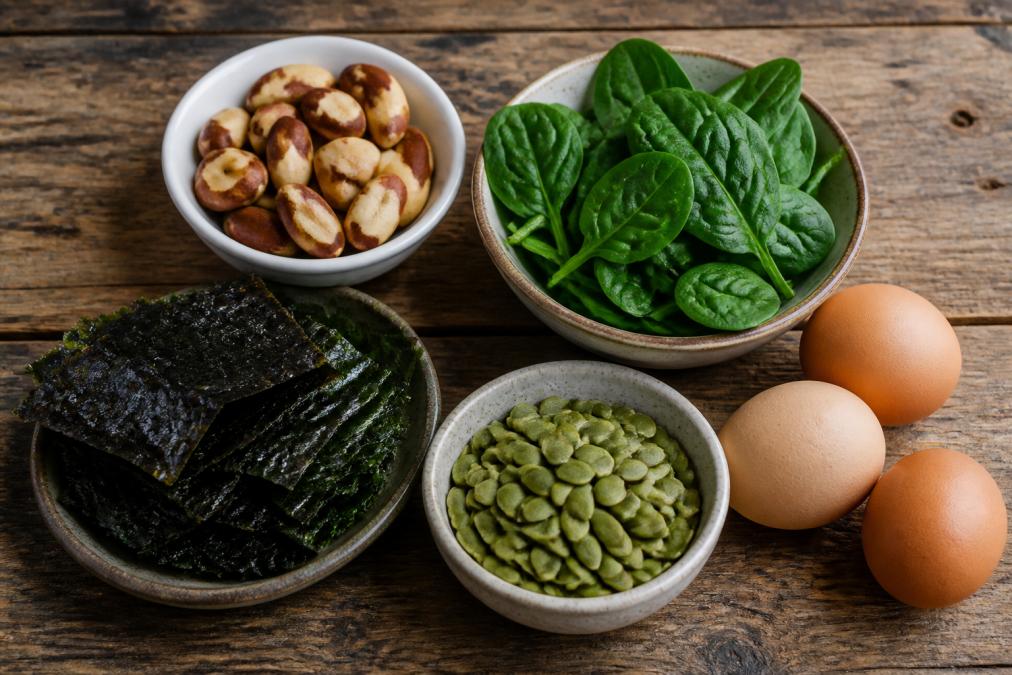
Iodine, Selenium, and Zinc: The Core Three
Iodine is the raw material for thyroid hormone synthesis. While iodine deficiency is less common in the US due to iodized salt, many Americans have shifted toward sea salt and specialty salts containing little to no iodine.
Selenium is critical for converting T4 into active T3. The thyroid contains the highest concentration of selenium per gram of any organ. Selenium also supports glutathione peroxidase, which protects thyroid tissue from oxidative damage, a key factor in autoimmune thyroiditis. Brazil nuts are the most concentrated dietary source, with one or two providing a full day's requirement.
Zinc supports thyroid-stimulating hormone production and T3 receptor function. Low zinc is associated with reduced thyroid hormone output and impaired immune regulation. Pumpkin seeds, oysters, and grass-fed beef are reliable sources.
Iron, vitamin D, magnesium, and B vitamins also support thyroid function. Iron deficiency impairs thyroid peroxidase activity, the enzyme responsible for iodine incorporation into thyroid hormones.
Biotin Interference and Thyroid Function Tests
High-dose biotin supplementation interferes with thyroid function tests. Biotin taken at 5,000 to 10,000 mcg can cause falsely low TSH readings and falsely elevated free T4 and free T3 results, mimicking hyperthyroidism on paper.
Foods to Avoid for Hypothyroidism and Autoimmune Thyroiditis
Diet does not replace medication, but it influences inflammation, nutrient absorption, and immune activity.
Goitrogens, Cruciferous Vegetables, and the Real Risk
Goitrogens are compounds that can interfere with iodine uptake and thyroid hormone synthesis. Cruciferous vegetables including broccoli, kale, cauliflower, Brussels sprouts, and cabbage contain glucosinolates that convert to goitrogenic compounds.
The goitrogenic effect of cruciferous vegetables is largely neutralized by cooking. Raw consumption in very large quantities poses the greatest risk, particularly in iodine-deficient individuals. For most people with hypothyroidism who maintain adequate iodine intake, moderate consumption of cooked cruciferous vegetables is not a meaningful concern.
Genuinely limit highly processed foods high in refined sugar and seed oils, gluten (particularly for those with Hashimoto's), large amounts of soy, and alcohol, which is directly toxic to thyroid tissue.
Processed Foods, Inflammation, and the Gut-Thyroid Axis
Roughly 20% of T4-to-T3 conversion occurs in the gut, mediated by healthy gut bacteria. Dysbiosis impairs this conversion and compromises nutrient absorption. Processed foods, artificial additives, and excess sugar feed inflammatory bacteria while starving beneficial strains, increasing intestinal permeability and systemic inflammation. For patients with Hashimoto's disease, addressing gut health is foundational.
Best Supplements for Thyroid Health: What Helps and What to Watch
Supplements can fill genuine nutritional gaps, but the thyroid supplement market often overstates benefits or carries real risks.
Supplement | Potential Benefit | Key Caution |
|---|---|---|
Selenium (200 mcg) | Supports T4-to-T3 conversion, reduces TPO antibodies | Excess selenium is toxic; do not exceed recommended dose |
Zinc (15-30 mg) | Supports TSH production and T3 receptor function | Competes with copper; balance with copper intake |
Vitamin D3 | Immune regulation, linked to lower autoimmune activity | Test levels before supplementing |
Magnesium glycinate | Supports cortisol regulation and sleep quality | Generally well tolerated; start low |
Ashwagandha | May support T4 levels and stress response | Contraindicated in some autoimmune conditions |
Iodine (supplemental) | Corrects deficiency | Excess iodine can worsen Hashimoto's; test before supplementing |
The most important rule: test, do not guess. Supplementing iodine without confirming deficiency is a common mistake. In Hashimoto's patients with adequate iodine levels, high-dose iodine supplementation can accelerate autoimmune activity.
How to Improve Thyroid Function Through Lifestyle Changes
Lifestyle modification is where genuine recovery lives. Medication addresses the hormone deficit. Lifestyle changes address the conditions that created it.

Sleep Hygiene, Circadian Rhythm, and Cortisol Regulation
Poor sleep is not just a symptom of thyroid dysfunction, it is also a driver. The thyroid-pituitary axis is governed by circadian rhythm. TSH levels peak in early morning hours and are suppressed by cortisol. Chronic sleep disruption blunts this natural TSH surge, impairing the signal that drives thyroid hormone production.
Maintain consistent sleep and wake times, limit blue light exposure for 90 minutes before bed, keep your bedroom cool (65-68°F) and fully dark, avoid caffeine after 1:00 PM, and prioritize 7-9 hours of sleep as a non-negotiable health metric.
Exercise Recommendations for Metabolism and Thyroid Support
Exercise supports thyroid function by improving insulin sensitivity, reducing inflammation, and supporting healthy metabolic rate. Moderate aerobic exercise, strength training, and low-impact movement like yoga are all beneficial. High-intensity exercise performed too frequently without adequate recovery can elevate cortisol and suppress thyroid hormone output. For patients with active Hashimoto's and significant fatigue, 20-30 minutes of walking or gentle strength work three to four times per week is more sustainable than aggressive training programs.
Consistency over intensity matters most. A modest, regular exercise habit does more for metabolism and thyroid support than sporadic high-intensity efforts.
Stress Management and Its Effect on TSH Levels
Chronic stress elevates cortisol, which directly suppresses TSH production and inhibits T4-to-T3 conversion. Sustained cortisol elevation is one of the most common reasons thyroid patients on appropriate medication still feel symptomatic.
Effective stress management includes diaphragmatic breathing practices (10 minutes daily has measurable effects on cortisol), boundary-setting around work hours and digital connectivity, addressing underlying anxiety or depression with professional support, and reducing inflammatory stressors like poor sleep and processed food.
Environmental Endocrine Disruptors and Drug-Nutrient Interactions
Environmental endocrine disruptors are chemicals that mimic or block hormone signaling. Several classes are specifically problematic for thyroid function, as documented by the National Institute of Environmental Health Sciences:
- Perchlorate: Found in some drinking water; competes with iodine for thyroid uptake
- PFAs (per- and polyfluoroalkyl substances): Present in non-stick cookware and food packaging; associated with altered TSH levels
- BPA and phthalates: Found in plastics; interfere with thyroid receptor binding
- Flame retardants (PBDEs): Present in older furniture and electronics; structurally similar to thyroid hormones
Practical reductions: filter drinking water with reverse osmosis or activated carbon, replace non-stick cookware with stainless steel or cast iron, minimize plastic food storage, and ventilate your home regularly.
Levothyroxine and Nutrient Absorption: What to Avoid at the Same Time
Levothyroxine has significant drug-nutrient interactions frequently underexplained to patients. According to the FDA's drug interaction guidance, several substances impair levothyroxine absorption when taken within four hours of the medication: calcium carbonate supplements, iron supplements, antacids containing aluminum or magnesium, high-fiber meals, coffee, and soy products.
Take levothyroxine on an empty stomach, 30-60 minutes before eating, with water only. Many patients who feel undertreated are simply taking their medication incorrectly, not necessarily underdosed.
Post-Diagnostic Lifestyle Maintenance for Long-Term Thyroid Health
A diagnosis is not the end of the process. For patients with hypothyroidism or Hashimoto's disease, the post-diagnostic phase determines long-term outcomes.
The most common failure mode is passive management: take medication, get annual labs, repeat. This misses the autoimmune activity that continues to damage thyroid tissue, nutrient depletions that accumulate over time, and lifestyle factors that determine whether the immune system stays calm.
Long-term thyroid health requires regular comprehensive testing (free T3, free T4, reverse T3, and thyroid peroxidase antibodies at least annually), ongoing nutritional monitoring, periodic reassessment of medication dosing, sustained lifestyle practices, and monitoring for comorbidities. Hashimoto's is associated with increased risk of other autoimmune conditions; proactive screening matters.
Patients who achieve genuine remission from autoimmune thyroiditis address the terrain: the gut, the stress response, the nutritional gaps, and the toxic exposures.
Moving Beyond Symptom Management to Root-Cause Care
The conventional model of thyroid care is built around a single biomarker and a single medication. For many patients, that model provides partial relief. Genuine improvement means asking different questions: Why is my immune system attacking my thyroid? What is driving the inflammation? What is preventing T4 from converting to T3? What environmental or nutritional factors am I missing?
These questions require comprehensive testing, structured lifestyle modification, and a physician who understands both clinical and functional dimensions of thyroid disease. As noted in resources from the National Institutes of Health's thyroid research division, autoimmune thyroid conditions involve complex immune dysregulation extending well beyond hormone replacement.
The difference between managing symptoms and addressing root causes is the difference between feeling adequate and feeling well.
Thyroid dysfunction that persists despite medication is not a dead end. It is a signal that root causes have not yet been identified. Thyroid Authority's physician-led, 12-month virtual program uses the proprietary EPIC Five™ Framework to systematically uncover what is driving your symptoms, whether that is nutrient deficiency, gut dysfunction, cortisol dysregulation, environmental toxic load, or unresolved autoimmune activity. The program is led by physicians who have personally navigated thyroid disease and understand what "normal labs, still suffering" actually feels like. Apply for the Thyroid Authority program and start the process of getting genuinely well, not just managed.
Frequently Asked Questions
What are the most common signs of thyroid dysfunction?
The most common signs of thyroid dysfunction include persistent fatigue, unexplained weight gain, brain fog, hair loss, cold sensitivity, constipation, depression, and low libido. Many people with hypothyroidism or Hashimoto's disease experience these symptoms even when standard thyroid function tests appear normal. If you recognize several of these signs, discuss a comprehensive thyroid panel with your physician rather than relying on TSH levels alone.
Which foods should I avoid for hypothyroidism?
Foods to avoid for hypothyroidism include heavily processed foods that drive inflammation, excessive soy products that may interfere with thyroid hormone absorption, and large amounts of raw cruciferous vegetables if iodine intake is already low. Gluten is worth evaluating if you have autoimmune thyroiditis, since some research links it to increased thyroid peroxidase antibodies. Alcohol and excess sugar can also impair metabolic rate and worsen symptoms. A physician-guided elimination approach is safer than blanket restriction.
What are the best supplements for thyroid health?
The best supplements for thyroid health typically address common deficiencies: selenium supports thyroid peroxidase activity, zinc aids hormone synthesis, and vitamin D is frequently low in people with autoimmune thyroiditis. Iodine supplementation requires caution because both deficiency and excess can impair thyroid function. Biotin supplements can skew TSH and thyroxine lab results, so always disclose supplement use before thyroid function tests. Work with a qualified clinician before starting any thyroid-related supplement protocol.
Can stress really affect thyroid function?
Yes. Chronic stress elevates cortisol, which can suppress thyroid-stimulating hormone production and interfere with the conversion of thyroxine (T4) to the more active triiodothyronine (T3). Over time, dysregulated cortisol can worsen autoimmune thyroiditis and make existing hypothyroidism harder to manage. Stress management practices such as consistent sleep, moderate exercise, and mindfulness techniques are not optional add-ons; they directly influence TSH levels and overall endocrine system balance.
How does levothyroxine interact with food and other nutrients?
Levothyroxine, the most commonly prescribed hormone replacement therapy for hypothyroidism, is significantly affected by what you eat and take alongside it. Calcium, iron supplements, antacids, and high-fiber foods can all reduce its absorption if taken too close together. Most physicians recommend taking levothyroxine on an empty stomach and waiting at least 30 to 60 minutes before eating. Always review your full supplement and medication list with your prescribing doctor to avoid unintended drug-nutrient interactions.
My thyroid labs are normal but I still feel terrible. What could explain that?
Standard thyroid function tests often measure TSH alone, which may miss suboptimal free T3, free T4, or elevated thyroid peroxidase antibodies seen in early Hashimoto's disease. Nutrient deficiencies, gut dysbiosis affecting the gut-thyroid axis, chronic stress, and environmental endocrine disruptors can all produce hypothyroid-like symptoms without triggering abnormal TSH levels. A root-cause evaluation that goes beyond standard panels is often necessary to identify why symptoms persist despite a clinical diagnosis of 'normal' labs.
How does sleep affect thyroid health?
Poor sleep disrupts the circadian rhythm that governs TSH secretion, which naturally peaks during the early hours of sleep. Chronic sleep deprivation elevates cortisol, reduces T3 conversion, and worsens inflammation associated with autoimmune thyroiditis. Prioritizing seven to nine hours of consistent, quality sleep is one of the most direct lifestyle modifications you can make to support thyroid hormone synthesis and overall metabolic rate. Sleep hygiene is a clinical factor, not just a wellness suggestion.