 How-to
Natural Ways to Calm Nighttime Inflammation
Last Updated: November 26, 2026
Quick Summary
Natural ways to calm nighttime inflammation include a timed evening routine: finish your last full meal by 6:00 p.m., stretch gently at 7:30, dim lights at 8:00, turn screens off at 8:30, take a warm shower at 9:00, and have herbal tea with slow breathing at 9:30 before a 10:00 lights out. A consistent sleep schedule, less screen time, and a cool, dark room are the foundation.
- Cortisol drops to its lowest point at night, which is one reason inflammation flares after dark.
- Keep the order of the evening routine even if you adjust the clock times to fit your life.
- If you only have energy for two changes, make them a fixed bedtime and a lighter, earlier dinner.
- Track evening stiffness, night wakings, morning stiffness minutes, and sleep quality weekly to measure progress.
- Seek medical evaluation for morning stiffness lasting more than an hour or joint swelling that persists.
Table of Contents
- Why Nighttime Inflammation Disrupts Sleep and What You Can Do
- A Timed Bedtime Routine to Calm Nighttime Inflammation
- Bedtime Habits to Reduce Inflammation
- What Can I Drink to Reduce Inflammation?
- Natural Remedies for Inflammation and Joint Pain
- Supplements to Reduce Inflammation in the Body
- Anti-Inflammatory Foods and Dietary Patterns for Nighttime Relief
- When to Seek Medical Evaluation for Nighttime Inflammation
- Apply for the Thyroid Authority Program
- Frequently Asked Questions
Why Nighttime Inflammation Disrupts Sleep and What You Can Do
Nighttime inflammation is the flare-up of inflammatory symptoms, such as joint stiffness, achiness, and swelling, that tends to feel worse in the evening and overnight hours. People with Hashimoto's often describe this complaint: the day is manageable, then the sun goes down and the body turns up the volume.
Why does it happen? Several factors line up after dark. Cortisol, a hormone with anti-inflammatory effects, typically drops to its lowest point at night. Body temperature also shifts. And lying still for hours can let stiffness settle into joints that were moving all day.
The result is a brutal loop. Pain and achiness fragment your sleep, and poor sleep makes inflammation feel worse the next night.
Below, we'll walk through a timed evening routine, the drinks and foods that help, and the habits worth changing. None of these are cures. They are small levers that many people find move the needle.
A Timed Bedtime Routine to Calm Nighttime Inflammation
The best routine is a repeatable one. Your body responds to rhythm, so the same sequence at the same time each night does more than a random collection of good habits. Below is a timed routine that some people with Hashimoto's may find helpful, followed by a simple way to grade which steps have the strongest evidence and how to track whether they are working for you.
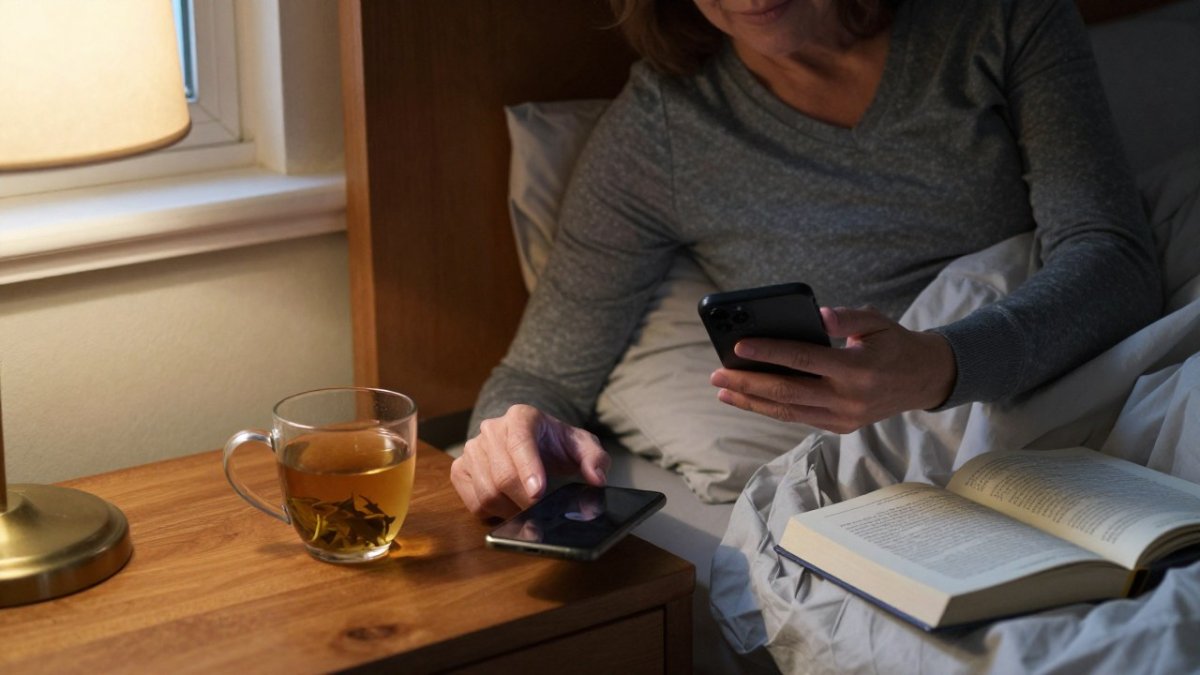
Step-by-Step Evening Schedule
Here is the routine we suggest starting with. Adjust the clock times to fit your life, but keep the order.
- 6:00 p.m. Eat your last full meal. Avoid heavy late-night meals.
- 7:30 p.m. Ten minutes of gentle stretching or joint mobility work.
- 8:00 p.m. Dim the lights in your home. This supports your circadian rhythm.
- 8:30 p.m. Screens off. Switch to a book, light conversation, or quiet music.
- 9:00 p.m. Warm shower or bath. The cooling afterward helps sleep onset.
- 9:30 p.m. Herbal tea and a few minutes of slow breathing for stress management.
- 10:00 p.m. Lights out, same time every night.
The order matters more than perfection. If you miss a step, keep the bedtime consistent.
Evidence Quality and Realistic Expectations
Not every step in this routine carries the same weight. It helps to know which habits are well-supported and which are more preliminary, so you can focus your effort where it counts.
- Strong support: A consistent sleep and wake schedule, limiting alcohol, avoiding heavy late-night meals, and keeping a cool, dark bedroom are backed by decades of sleep research. These are the foundation.
- Moderate support: Dimming lights in the evening and reducing screen exposure before bed help support melatonin production and circadian timing. The effect is real but often modest.
- Preliminary support: Tart cherry juice and specific herbal teas have early evidence for sleep or inflammation, but they are not substitutes for the basics. Treat them as optional add-ons.
The strong-support habits are generally where most of the benefit comes from. If you only have energy for two changes, make them a fixed bedtime and a lighter, earlier dinner.
How to Identify Your Personal Triggers
Nighttime inflammation rarely has one cause. A simple diary can help you connect symptoms to patterns. Each evening, note:
- What you ate for dinner and when you finished
- Your activity level that day
- Your stress level (1-10)
- Screen time in the hour before bed
- How you slept and how you felt on waking
After two to three weeks, look for repeating patterns. Some people notice that late, heavy meals or alcohol on a given night line up with worse morning stiffness, and that days with more walking or gentle movement line up with better sleep. This is not a diagnosis tool, but it helps you and your clinician spot likely triggers.
Measuring Progress Over Time
Changes are easier to keep when you can see them working. Track four simple measures weekly:
- Pain or stiffness level in the evening (1-10)
- How many times you wake during the night
- Morning stiffness duration in minutes
- Overall sleep quality (1-10)
A realistic expectation is gradual improvement over four to six weeks, not overnight change. If nothing shifts after a month of consistent effort, that is useful information to bring to a clinician.
Watch out: If you become rigid about the routine and feel more anxious when you miss a step, scale back. The goal is a calm, repeatable pattern, not a perfect performance.
Here is the evening schedule the article suggests starting with, keeping the order even if you adjust the clock times.
| Time | What to do |
|---|---|
| 6:00 p.m. | Eat your last full meal; avoid heavy late-night meals |
| 7:30 p.m. | Ten minutes of gentle stretching or joint mobility work |
| 8:00 p.m. | Dim the lights at home to support circadian rhythm |
| 8:30 p.m. | Screens off; switch to a book or quiet music |
| 9:00 p.m. | Warm shower or bath; cooling afterward helps sleep onset |
| 9:30 p.m. | Herbal tea and a few minutes of slow breathing |
| 10:00 p.m. | Lights out, same time every night |
Bedtime Habits to Reduce Inflammation
Bedtime habits to reduce inflammation come down to three things: a consistent sleep schedule, less screen time before bed, and a cool, dark room. These are unglamorous, but they are the foundation everything else sits on.
Sleep Schedule and Screen Time
A consistent bedtime and wake time, even on weekends, helps regulate your circadian rhythm (the CDC). A fixed schedule may help with morning stiffness, though its effect varies from person to person.
Screen time is the other big one. Blue light from phones and laptops signals your brain to stay alert. Try setting a phone alarm for 30 minutes before bed as a cue to put devices away.
Watch out: scrolling in bed trains your brain to associate the bedroom with wakefulness. If you cannot sleep, get up and read in low light instead.
What Can I Drink to Reduce Inflammation?
What can I drink to reduce inflammation? The most reliable options are water, green tea, and ginger or turmeric tea. None of these replace medical care, but they are simple, low-risk additions to your evening.
Hydration matters more than most people expect. Mild dehydration can make joints feel stiffer, so keep a glass of water nearby during the day and sip through the evening without drinking so much that you are up all night.
- Green tea is a common everyday drink. Choose decaf at night.
- Ginger tea is a familiar warm drink.
- Turmeric tea with a pinch of black pepper is a popular warm drink.
- Tart cherry juice is a common drink, though evidence on sleep is early.
Limit alcohol, which can disrupt sleep later in the night.
Natural Remedies for Inflammation and Joint Pain
Some people use heat, gentle movement, and topical options for stiff joints. A warm compress on stiff joints before bed may feel comforting.
Gentle exercise earlier in the day, such as walking or stretching, supports joint mobility and weight management. Maintaining a healthy weight can reduce load on joints.
For relaxation, try a few minutes of slow breathing or a guided body scan. Nervous system regulation is one factor some clinicians consider when looking at chronic symptoms.
A common mistake is doing intense exercise late at night. It can leave you wired and make inflammation feel worse. Keep evenings gentle.
Supplements to Reduce Inflammation in the Body
Supplements to reduce inflammation in the body are widely marketed, and it is worth being cautious. Turmeric, ginger, omega-3 fatty acids, and magnesium are among the most discussed. Evidence varies, and supplements can interact with medications.
If you take thyroid medication, timing matters. Some supplements, including calcium and iron, can interfere with absorption. Always talk to your clinician before adding anything.
At Thyroid Authority, we treat supplements as support, not solutions. The EPIC Five™ Framework looks at the whole picture, including nutrition, sleep, stress, and movement.
For a closer look at which options support thyroid function, see our guide to best supplements for thyroid conversion.
Anti-Inflammatory Foods and Dietary Patterns for Nighttime Relief
Dietary patterns built around whole foods may suit an evening routine, and the overall pattern matters more than any single food.
- Berries for antioxidants
- Leafy greens like spinach and kale
- Fatty fish such as salmon for healthy fats
- Whole grains and legumes for steady energy
- Turmeric and ginger as everyday spices
Keep dinner moderate and finish a few hours before bed. Heavy late-night meals can disrupt sleep.
If you want to understand how diet supports thyroid health, read our article on whether an anti-inflammatory diet can support your thyroid. For a broader list of daily changes, see our guide to lifestyle changes to manage chronic autoimmune inflammation.
When to Seek Medical Evaluation for Nighttime Inflammation
Most nighttime achiness is manageable with habits. But some symptoms need a clinician's eyes, not a home remedy.
Seek medical evaluation if you notice:
- Joint swelling, redness, or warmth that persists
- Pain that wakes you repeatedly or keeps getting worse
- Morning stiffness lasting more than an hour
- Fever, unexplained weight loss, or new rashes
- Numbness, weakness, or loss of function
These signs can point to conditions beyond ordinary inflammation. A qualified clinician should assess them. We do not diagnose here, and neither should a search engine.
If your symptoms persist despite the habits above, a personalized plan may help. You can apply for a discovery call to talk through your situation with our team, or start with a Complimentary Discovery Session to see whether a root-cause approach fits what you're dealing with. For more on sleep and thyroid health specifically, see our guide on how to improve sleep quality with Hashimoto's.
Apply for the Thyroid Authority Program
Nighttime inflammation rarely has one cause, and it rarely has one fix. The habits above are a starting point, not a finish line. If you have Hashimoto's and still feel symptomatic despite normal labs, the missing piece may be a root-cause approach rather than another symptom patch.
Thyroid Authority offers a physician-led, 12-month virtual program that uses the EPIC Five™ Framework to look at nutrition, sleep, stress, movement, and more. Our doctors have personally navigated their own thyroid health journeys.
The program provides structured guidance over a 12-month period.
Learn more about Thyroid Authority or book a Complimentary Discovery Session.
If nighttime symptoms are shaping your days, you do not have to keep guessing. Our team can help you find the root cause and build a plan that fits your life. Apply for the Thyroid Authority Program and start with a conversation about what is really going on.
Frequently Asked Questions
What reduces inflammation at night?
A consistent bedtime routine that includes a cool, dark room, limited screen time, and a light snack can make evenings more restful. Gentle stretching and a consistent sleep schedule are common habits for winding down.
Can poor sleep make inflammation worse?
Yes. A consistent bedtime, dark room, and relaxation practices can help improve sleep quality. Prioritizing sleep duration and schedule is a common foundation for a healthy evening routine.
What can I drink before bed to reduce inflammation?
Options people often choose for a calming evening drink include tart cherry juice, chamomile or ginger tea, and golden milk with turmeric. Limiting alcohol and sugary beverages can help sleep. Keep portions small to prevent late-night bathroom trips.
Which bedtime habits may help with inflammation?
Key bedtime habits include sticking to a consistent sleep schedule, dimming lights an hour before bed, limiting screen time, avoiding heavy late-night meals, and practicing relaxation techniques like deep breathing or gentle stretching. Keeping your bedroom cool and dark can also support better sleep.