 how-to
Integrating Yoga for Thyroid Hormone Balance
Table of Contents
- Why Yoga Matters for Thyroid Health
- Understanding Your Thyroid Before You Start
- Yoga Poses for Hypothyroidism and Thyroid Support
- Yoga for Hyperthyroidism: Calming the Overactive Gland
- Breathing Exercises for Thyroid Health and Nervous System Regulation
- A Beginner Thyroid Yoga Sequence: 15-Minute Daily Practice
- Thyroid Medication and Yoga: Safety and Compatibility
- Common Mistakes and Contraindications
- Measuring Progress and Setting Realistic Expectations
- When to Consult Your Doctor
- Frequently Asked Questions
Last Updated: October 10, 2026
Why Yoga Matters for Thyroid Health
Your thyroid controls how fast your body burns energy, how warm you feel, and your mood. When it's out of balance, everything suffers, exhaustion, unexplained weight gain, brain fog. Unlike medication alone, integrating yoga for thyroid hormone balance addresses your nervous system, improves blood circulation to the thyroid gland, and reduces the stress that triggers or worsens thyroid dysfunction. Poses, breathing exercises, and relaxation work together to support your body's natural ability to regulate thyroid hormones.
Understanding Your Thyroid Before You Start
Two main problems occur:
Hypothyroidism: Your thyroid doesn't produce enough hormone. Metabolism slows, weight increases, you feel cold and exhausted. Hashimoto's disease (immune system attacking your thyroid) is the most common cause (Hashimoto's Disease).
Hyperthyroidism: Your thyroid produces too much hormone. Heart races, weight drops, anxiety and jitteriness follow. Graves' disease is the most common cause.
The approach to integrating yoga for thyroid hormone balance differs significantly between these two conditions. What calms an overactive thyroid can slow down an underactive one.
Hypothyroidism vs. Hyperthyroidism: Different Approaches
If you have hypothyroidism, your goal is stimulation. You want poses and breathing techniques that energize your system and increase circulation to the thyroid region. Forward bends, twists, and inversion poses help activate the thyroid gland.
If you have hyperthyroidism, your goal is calming. You need gentle, restorative poses that soothe your nervous system without overstimulating the thyroid. Avoid intense twists and deep forward bends. Instead, focus on supported poses and slow breathing.
Here's what matters most: know which condition you have before starting. If you're unsure, consult your doctor. Taking the wrong approach can make symptoms worse.
Yoga Poses for Hypothyroidism and Thyroid Support
When your thyroid is underactive, certain yoga poses directly stimulate the thyroid gland and increase blood flow to the neck region. These aren't gentle stretches, they're active poses designed to wake up your system.
Neck Stretching and Thyroid Gland Circulation
Tight neck muscles restrict blood circulation to your thyroid gland. Gentle neck stretches improve that flow.
Gentle Neck Stretches (hold each 20-30 seconds):
- Drop your right ear toward your right shoulder. Feel the stretch on the left side of your neck.
- Slowly turn your head to look over your right shoulder.
- Gently drop your chin toward your chest.
- Repeat on the other side.
Do these stretches three times daily. Consistency matters: neck mobility improves breathing and reduces tension that compresses your thyroid area.
Core Asanas That Stimulate the Thyroid Region
Cobra Pose (Bhujangasana): Lie on your belly. Place your hands under your shoulders. Press your chest forward and up, keeping your pelvis on the ground. Hold for 15-30 seconds. This pose stretches the front of your neck and stimulates the thyroid region.
Shoulder Stand (Sarvangasana): One of the most powerful poses for thyroid health. Lie on your back, lift your legs and torso, supporting your back with your hands. Hold for 10-30 seconds. The inverted position increases blood flow to your thyroid gland.
Plow Pose (Halasana): From shoulder stand, lower your toes toward the ground behind your head. This deepens the neck stretch and increases circulation. Hold for 10-20 seconds.
Fish Pose (Matsyasana): Lie on your back with legs extended. Place your hands under your back and lift your chest, letting your head drop back gently. Hold for 15-30 seconds.
Bridge Pose (Setu Bandhasana): Lie on your back with knees bent and feet flat. Press your feet into the ground and lift your hips high. Hold for 20-30 seconds.
Downward-Facing Dog (Adho Mukha Svanasana): Start on hands and knees. Spread your fingers wide. Push your hips up and back, forming an inverted V-shape with your head hanging down. Hold for 30-60 seconds.
Yoga for Hyperthyroidism: Calming the Overactive Gland
When your thyroid produces too much hormone, your nervous system is in overdrive. Your heart races. Your mind spins. Intense yoga poses make this worse.
Instead, you need gentle, restorative poses that calm your nervous system without stimulating your thyroid further. Think slow, supported, and grounding.
Child's Pose (Balasana): Kneel on your mat. Bring your big toes together and spread your knees wide. Fold forward, resting your forehead on the mat. This calming pose reduces anxiety and slows your heart rate.
Legs-Up-the-Wall Pose (Viparita Karani): Lie on your back with your legs extended up a wall. This restorative pose calms your nervous system without any active effort. Stay here for 5-10 minutes.
Supported Reclined Twist: Lie on your back. Pull one knee toward your chest, then gently lower it across your body. Use a pillow under your knee for support. This gentle twist releases tension without forcing movement.
Cat-Cow Pose (Marjaryasana-Bitilasana): Move slowly between these two poses. Cow: drop your belly, lift your gaze. Cat: round your spine, tuck your chin. Move with your breath, slow and deliberate. This gentle flow calms your system.
Avoid intense poses like power yoga, vigorous vinyasa flows, or deep twists. These overstimulate an already overactive thyroid.
Breathing Exercises for Thyroid Health and Nervous System Regulation
Your breath regulates your nervous system, which directly controls thyroid hormone production and sensitivity. Chronic stress suppresses thyroid function. Pranayama, controlled breathing, activates your parasympathetic nervous system. Slow, extended exhale breathing tells your vagus nerve you're safe, downregulating stress hormones and allowing thyroid hormones to work efficiently.
Pranayama for Hypothyroidism: Energizing Breath Patterns
If your thyroid is underactive, you need breathing patterns that activate and energize your system. These techniques increase oxygen delivery and stimulate your sympathetic nervous system, the accelerator, without creating anxiety.
Ujjayi Breath (Victorious Breath): Inhale through your nose for four counts. Exhale through your mouth with a soft "ha" sound, then close your mouth and exhale through your nose with the same sound in your throat. Practice 3-5 minutes, twice daily.
Breath of Fire (Kapalabhati): Sit upright. Exhale forcefully through your nose in short, rapid bursts with your belly pulling in. Inhale passively between bursts. Start with 20-30 exhales per round, rest 30 seconds, repeat 2-3 rounds. Do once daily in the morning. Avoid if you have high blood pressure or are pregnant.
Pranayama for Hyperthyroidism: Calming Breath Patterns
When your thyroid is overactive, you need breathing patterns that lengthen your exhale and activate the brake pedal of your nervous system. Extended exhale breathing is the most powerful tool for calming an overactive thyroid.
Extended Exhale Breathing (4-6-8 or 4-8 Pattern): Sit comfortably. Inhale through your nose for a count of four. Exhale through your nose for a count of six or eight, make your exhale twice as long as your inhale. This signals safety to your nervous system and activates your parasympathetic brake. Practice for 5-10 minutes, twice daily. Research on heart rate variability shows that extended exhale breathing reduces anxiety within 2-3 minutes and lowers cortisol over weeks of consistent practice. This is the single most effective breathing technique for hyperthyroidism.
Nadi Shodhana (Alternate Nostril Breathing): Close your right nostril with your thumb. Inhale through your left nostril for four counts. Close your left nostril with your ring finger. Exhale through your right nostril for four counts. Continue for 5-10 rounds. This balancing breath calms your mind and synchronizes both sides of your nervous system. Practice once daily, preferably in the evening.
Frequency and Timing for Results
Breathing exercises work best when practiced consistently. For hypothyroidism, do energizing techniques in the morning. For hyperthyroidism, practice calming techniques in the evening. Most people notice measurable improvements in energy, anxiety, and sleep quality within 2-3 weeks of daily practice.
A Beginner Thyroid Yoga Sequence: 15-Minute Daily Practice
This 15-minute sequence combines the most effective poses and breathing exercises for thyroid support. Do it every morning or evening, consistency matters more than intensity.

Warm-Up and Centering
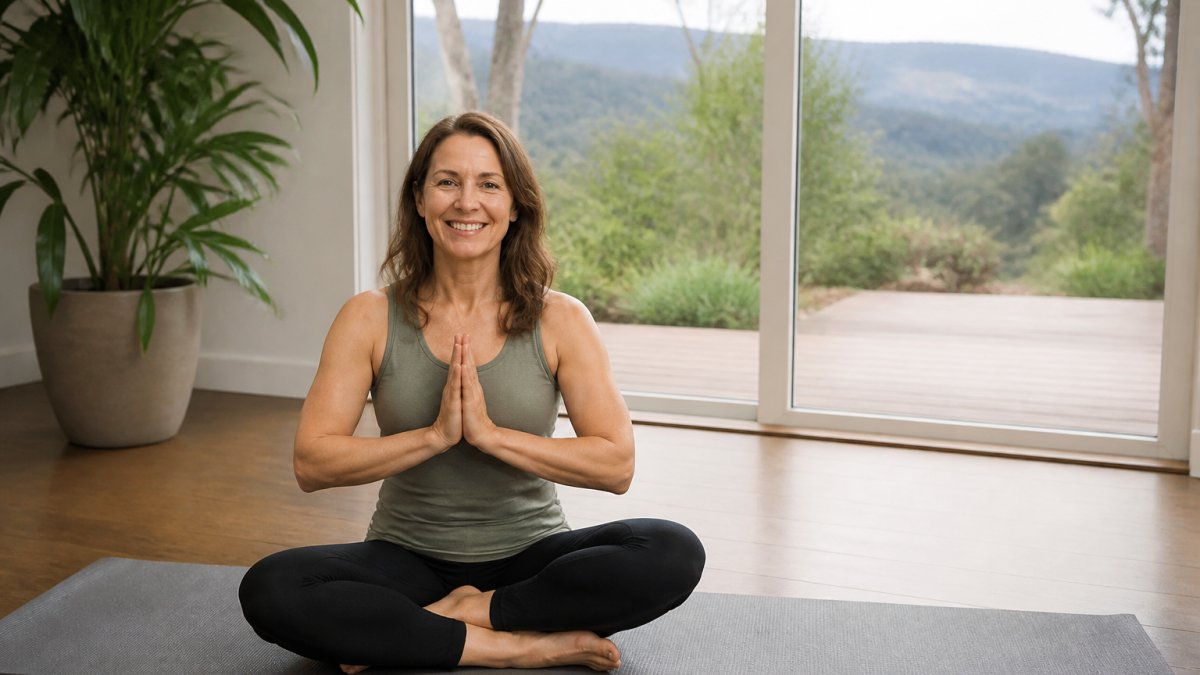
Minutes 1-2: Seated Breathing Sit cross-legged on your mat. Close your eyes. Practice extended exhale breathing for two minutes. Inhale for four counts, exhale for six. This centers your mind and prepares your body.
Minutes 3-4: Neck Stretches Perform all four neck stretches described earlier, right ear to shoulder, left ear to shoulder, chin to chest, and gentle head turns. Hold each 20-30 seconds. This warms up the thyroid region.
Main Sequence Steps
Minutes 5-6: Cat-Cow Pose Move slowly between cat and cow poses for two minutes, syncing movement with breath. This mobilizes your spine and increases circulation.
Minutes 7-8: Downward-Facing Dog Hold for 30-60 seconds. Rest for 15 seconds. Repeat twice. This increases blood flow to your thyroid gland and brain.
Minutes 9-10: Cobra Pose Hold for 15-30 seconds. Rest for 15 seconds. Repeat twice. This directly stimulates your thyroid.
Minutes 11-12: Bridge Pose Hold for 20-30 seconds. Rest for 15 seconds. Repeat twice. This strengthens your neck and upper back.
Cool-Down and Relaxation
Minutes 13-15: Child's Pose and Savasana Spend two minutes in child's pose. Then lie on your back in savasana (corpse pose) for three minutes. Let your body absorb the benefits of your practice.
This sequence takes exactly 15 minutes. Do it daily for best results. Your body responds to consistency, not intensity.
Thyroid Medication and Yoga: Safety and Compatibility
Yoga and thyroid medication work together. Your medication replaces or adjusts thyroid hormones. Yoga supports your nervous system and improves circulation. Timing matters: take medication on an empty stomach, 30-60 minutes before eating or drinking (except water). Wait at least 30 minutes after medication before vigorous yoga. Tell your doctor when starting yoga; they may adjust your dosage as thyroid function improves. Never stop or reduce medication without consulting your doctor.
Common Mistakes and Contraindications
Mistake 1: Doing the wrong poses for your condition. Match your practice to your condition. Gentle yoga alone won't stimulate an underactive thyroid. Intense poses will overstimulate an overactive one.
Mistake 2: Pushing too hard. Gentle, consistent practice beats occasional intense sessions.
Mistake 3: Ignoring neck tension. Tight neck muscles restrict blood flow to your thyroid. Spend time on neck stretches daily.
Mistake 4: Skipping breathing exercises. Breathing exercises regulate your nervous system more powerfully than poses alone.
Contraindications to avoid:
- Neck injuries or cervical spine problems: Avoid deep neck stretches and inversions. Work with a physical therapist first.
- High blood pressure: Skip intense poses and inversions. Focus on gentle, restorative practice.
- Recent neck or thyroid surgery: Wait 6-8 weeks before starting. Get clearance from your surgeon.
- Severe hyperthyroidism: Start with only gentle poses and breathing exercises.
- Pregnancy: Modify poses and avoid deep twists. Consult your doctor before starting.
When in doubt, start gentle. You can always progress.
Measuring Progress and Setting Realistic Expectations
Yoga is a powerful support tool for thyroid health.
What Research Actually Shows
Studies show consistent yoga practice improves cortisol levels, anxiety, sleep quality, and energy. However, yoga alone cannot normalize thyroid hormone levels or cure thyroid conditions. Yoga reduces stress that worsens symptoms, improves circulation to the thyroid gland, and helps your body use thyroid hormones more efficiently.
If you have a diagnosed thyroid condition, yoga is part of your recovery plan, not the whole plan. The most successful patients combine medical care, medication when needed, nutrition, stress management, sleep, and movement.
When Yoga Is Your Primary Tool
Yoga works best as a primary intervention when:
- You have subclinical hypothyroidism (low-normal thyroid levels with symptoms) and your doctor agrees to monitor rather than medicate immediately
- You have stress-related thyroid dysfunction with no structural disease
- You are in the early stages of thyroid imbalance and want to address root causes before medication becomes necessary
- You are managing your thyroid well on medication and want to optimize your energy, mood, and metabolism further
In these situations, consistent yoga practice, combined with good sleep, stress management, and nutrition, can produce significant improvements within 8-12 weeks.
When You Need Medical Intervention First
Yoga alone is not appropriate if:
- You have severe hypothyroidism with TSH above 10 and significant symptoms like extreme fatigue, severe weight gain, or depression
- You have Graves' disease or severe hyperthyroidism with rapid heart rate, tremor, or eye involvement
- You have thyroid cancer or a history of thyroid cancer
- You are pregnant and have thyroid dysfunction, pregnancy requires precise hormone levels that yoga cannot achieve
- You have a thyroid nodule that needs evaluation or monitoring
In these cases, medication and medical monitoring come first. Yoga becomes a complementary practice once your condition is stabilized.
Realistic Timeline for Improvement
Most people notice improvements in specific areas at different rates:
- Anxiety and mood: 1-2 weeks of consistent practice. Breathing exercises produce the fastest results.
- Sleep quality: 2-3 weeks. Better sleep often comes before energy improves because your nervous system is finally resting.
- Energy levels: 4-6 weeks. Your metabolism and hormone sensitivity shift gradually.
- Weight changes: 8-12 weeks. Thyroid metabolism is slow to change. Expect 1-2 pounds per month, not rapid weight loss.
- Lab work improvements: 6-8 weeks minimum. Ask your doctor to recheck TSH, Free T4, and Free T3 every 6-8 weeks. You're looking for stable or improving numbers, not dramatic shifts.
Don't expect dramatic changes in a week. Your thyroid didn't become imbalanced overnight, and it won't rebalance overnight either. Patience is part of the practice.
How to Track Real Progress
Track your progress honestly in these categories:
Energy and Fatigue:
- Can you wake up without an alarm?
- Do you have energy for exercise without crashing afterward?
- Can you work or parent without hitting a wall at 3 p.m.?
Sleep Quality:
- Are you sleeping 7-9 hours without waking?
- Do you wake up refreshed or groggy?
- Is your sleep consistent, or does it vary widely?
Mood and Anxiety:
- Is your baseline anxiety lower?
- Can you handle stress without spiraling?
- Is your focus sharper? Your memory better?
Physical Symptoms:
- Is your hair loss slowing or stopping?
- Is your skin clearer or less dry?
- Is your digestion improving?
- Are you feeling warmer (if hypothyroid) or less overheated (if hyperthyroid)?
Lab Work: This is the objective measure. Ask your doctor for:
- TSH (thyroid-stimulating hormone)
- Free T4 and Free T3 (the active thyroid hormones)
- Thyroid antibodies if autoimmune disease is suspected
Your goal is stable or improving numbers over 6-8 weeks. If your numbers are worsening despite yoga practice, your condition may need medication or a medication adjustment. That's not failure, that's information.
The Role of Lifestyle Medicine
The most successful patients address multiple root causes simultaneously: stress, sleep, nutrition, movement, and when necessary, medication. Dr. Jason Bradley, with over 26 years of thyroid and functional medicine expertise, and Dr. Rachel, specializing in nervous system regulation and the nutritional components that perpetuate chronic illness, have refined this approach through thousands of patient outcomes. The EPIC Five Plan framework integrates these elements so you're not just managing symptoms, you're addressing what's actually driving your thyroid dysfunction.
If you've been doing yoga and other lifestyle changes but still feel stuck, the missing piece is often medical assessment. That's why partnership with a clinician who understands both functional medicine and conventional thyroid care is so valuable.
When to Consult Your Doctor
Yoga is powerful, but it's not a replacement for medical care. Consult your doctor if:
- You experience chest pain, shortness of breath, or dizziness during yoga
- Your thyroid symptoms worsen despite consistent practice
- You're considering changing your thyroid medication dosage
- You have new symptoms like severe fatigue, rapid weight changes, or persistent anxiety
- You're unsure whether a specific pose is safe for your condition
According to the American Thyroid Association guidelines, regular monitoring by a healthcare provider is essential for anyone with thyroid dysfunction. Yoga complements medical care, it doesn't replace it.
At Thyroid Authority, we believe in a partnership approach. Your doctor manages your medication and lab work. Yoga, nutrition, stress management, and sleep support your body's natural healing capacity. Together, they create lasting change.
If you're ready to move beyond surface-level symptom management and uncover what's actually driving your thyroid dysfunction, we invite you to explore whether the Thyroid Authority program is right for you. Schedule a complimentary discovery session to speak with one of our physicians about your specific situation.
Frequently Asked Questions
Can yoga actually balance thyroid hormones, or is it just stress relief?
Yoga supports thyroid hormone balance through multiple pathways: neck stretches and gentle inversions increase blood circulation to the thyroid gland, breathing exercises calm the nervous system (which regulates the endocrine system), and forward folds stimulate the thyroid region. While yoga alone won't replace thyroid medication, it works alongside treatment to support overall thyroid function. Studies suggest consistent practice helps reduce stress-related hormone fluctuations. Results vary by individual, and thyroid hormone levels are best monitored by your doctor through lab work.
Is yoga safe if I'm taking thyroid medication?
Yes, yoga is generally safe alongside thyroid medication when practiced mindfully. Avoid intense inversions (like headstands) immediately after taking your medication, as they may affect absorption. Most therapeutic yoga poses complement medication well. However, if you have Hashimoto's disease or other autoimmune thyroid conditions, certain intense practices might trigger flares. Always inform your healthcare provider about your yoga practice, especially if you're adjusting medication or experiencing new symptoms. A physician-led program like Thyroid Authority can help integrate yoga safely into your overall treatment plan.
How often should I practice yoga for thyroid health?
A consistent 15-30 minute practice 4-5 times per week is more effective than sporadic longer sessions. Gentle, therapeutic yoga works best for thyroid support, intensity matters less than regularity. Many people see improvements in energy and stress levels within 3-4 weeks of consistent practice. If you're managing hypothyroidism or hyperthyroidism, daily gentle stretching (even 10 minutes) combined with 2-3 longer sessions per week creates sustainable momentum. Listen to your body and adjust frequency based on how you feel.
What's the difference between yoga for hypothyroidism versus hyperthyroidism?
Hypothyroidism (underactive thyroid) benefits from stimulating poses like Cobra Pose, Shoulder Stand, and Fish Pose, which increase circulation and energy. Hyperthyroidism (overactive thyroid) requires calming, restorative poses like Child's Pose, Legs-Up-the-Wall, and gentle forward folds that soothe the nervous system without overstimulation. Hyperthyroidism also calls for slower breathing and longer hold times to reduce activation. Both conditions benefit from neck stretches and stress-reducing pranayama. Work with a qualified instructor or healthcare provider to ensure your practice matches your specific thyroid condition.
Integrating yoga for thyroid hormone balance is one of the most effective tools you have. It costs nothing, requires no special equipment, and delivers real results when practiced consistently. Your thyroid responds to gentle, sustained effort, not force. Start with the 15-minute sequence, practice daily, and give your body 6-8 weeks to show you what's possible. If you're struggling with thyroid symptoms despite medication, consider addressing the deeper root causes with professional support.