 How-to
9 Reasons Hashimoto's Causes Night Sweats and Poor Sleep
Last Updated: November 13, 2026
Quick Summary
Hashimoto's night sweats happen because an autoimmune thyroid that can't hold a steady hormone level disrupts your body's temperature control, so you sweat, chill, or both at night. The same hormonal swings fragment sleep, causing frequent waking and next-day fatigue. Testing and a symptom log help pinpoint whether your thyroid, dose, or another cause is driving it.
- Hypothyroidism can cause night sweats even though hyperthyroidism is the more classic sweating cause.
- Keep the bedroom between 60-67°F and use breathable cotton or linen bedding.
- Finish eating 2-3 hours before bed and limit alcohol, which can trigger sweating.
- Track symptoms each morning for two weeks, logging time, severity, food, stress, and medication timing.
- Seek prompt care for drenching sweats with fever, chest pain, fainting, or sweats that soak bedding nightly.
Table of Contents
- Why Hashimoto's Night Sweats and Sleep Problems Happen
- Can Hypothyroidism Cause Night Sweats?
- Does Hypothyroidism Cause Insomnia?
- Hashimoto's Flare-Up Symptoms That Disrupt Sleep
- Hypothyroidism vs. Hyperthyroidism: Which One Causes Sweats?
- Other Causes of Night Sweats Beyond Thyroid Disease
- Thyroid Medication, Dose Adjustments, and Sleep
- Sleep Solutions for Hashimoto's: A Step-by-Step Plan
- Red Flags: When Night Sweats and Poor Sleep Need Urgent Care
- Book a Complimentary Discovery Session With Thyroid Authority
- Frequently Asked Questions
Why Hashimoto's Night Sweats and Sleep Problems Happen
Hashimoto's night sweats and sleep problems are common, and they usually trace back to one thing: a thyroid that can't hold a steady hormone level. This pattern is common in people whose labs look "normal" but who wake up drenched at 2 a.m. Hashimoto's thyroiditis is an autoimmune condition, so the damage can come in waves. That means your hormone output can swing up and down, and your body's thermostat can swing with it.
How Thyroid Hormone Changes Affect Body Temperature
Thyroid hormone helps set your metabolic rate, and your metabolic rate helps set your body temperature. When hormone levels shift, your body can struggle to shed heat at night. The result is sweating, chills, or both in the same night. Hormonal changes also touch the systems that control your sleep-wake cycle, which is why sleep disruption so often travels with thyroid symptoms.
Can Hypothyroidism Cause Night Sweats?
Yes, hypothyroidism can cause night sweats, though it's less obvious than you'd expect. Low thyroid hormone slows metabolism, and a slowed system can misfire on temperature regulation. Some people with hypothyroidism report sweating episodes alongside fatigue and feeling cold at other times. For a deeper look at how fatigue and poor sleep overlap in Hashimoto's, see our guide to sleep problems and Hashimoto's fatigue.
The confusion comes from the direction of the symptom. Most people assume sweating means "too much" thyroid hormone. In practice, the body's temperature control is more fragile than that simple rule suggests.
Does Hypothyroidism Cause Insomnia?
Hypothyroidism can contribute to insomnia, but usually as part of a cluster rather than on its own. People describe lying awake, feeling wired but exhausted, or waking repeatedly through the night. Nervousness, irritability, and a racing mind can also show up here, even in people whose thyroid is running low rather than high.
Frequent Waking, Fatigue, and the Sleep Cycle
Frequent waking is one of the most commonly reported sleep complaints. Each wake-up can fragment the deep sleep stages your body needs for repair. The next day brings more fatigue, more brain fog, and more irritability, which makes the following night harder. That loop is worth breaking early.
Hashimoto's Flare-Up Symptoms That Disrupt Sleep
A Hashimoto's flare-up is a period when autoimmune activity and symptoms intensify, and it often shows up at night first. Common flare-up symptoms that wreck sleep include:
- Night sweats and sudden heat surges
- A racing or pounding heartbeat at rest
- Muscle weakness or aching joints
- Heightened nervousness or irritability
- New or worsening fatigue despite more sleep
If you suspect a flare, our overview of what a Hashimoto's flare-up is covers the signs and triggers in more detail. Flares often follow stress, illness, or a medication change, so timing matters when you report symptoms.
Hypothyroidism vs. Hyperthyroidism: Which One Causes Sweats?
Hyperthyroidism is the more classic cause of sweating, because an overactive thyroid speeds up metabolism and heat production. Hypothyroidism usually points the other way, toward feeling cold.
Self-diagnosing from a single symptom is not advisable. Sweating can appear in either direction, and the only way to know is thyroid testing alongside your symptom history.
Other Causes of Night Sweats Beyond Thyroid Disease
Thyroid disease is only one possible cause, and a good evaluation rules out the rest. Other common causes include:
- Menopause and perimenopause
- Low blood sugar overnight
- Infections, including mild ones
- Certain medications and their side effects
- Anxiety and panic episodes
- Sleep environment problems like heavy bedding or a warm bedroom
Menopause and Perimenopause as Overlapping Causes
Menopause and perimenopause overlap heavily with thyroid symptoms, and many people have both at once. Hot flashes, night sweats, and sleep disruption are hallmarks of hormonal changes in midlife. When thyroid symptoms and perimenopause arrive together, sorting out which is driving what takes a careful history. This is one reason we ask about cycle changes and age alongside thyroid labs. Because thyroid changes and midlife hormonal shifts can both contribute to feeling overheated at night, noticing when the warmth occurs may help clarify the pattern, and Bambusasheets offers another perspective on why sleep can feel so hot.
Thyroid Medication, Dose Adjustments, and Sleep
Levothyroxine replaces the hormone your thyroid can't make, and the dose has to match your body's needs. Too little leaves hypothyroid symptoms in place. Too much can push you toward a hyperthyroid pattern, with nervousness, a racing heart, and night sweats. Medication side effects and dose adjustment issues can be among the more fixable causes of poor sleep.
How Thyroid Medication Timing Affects Sleep
Levothyroxine is typically taken on an empty stomach, 30-60 minutes before breakfast. Some people find that a different timing works better for their schedule, but any change in timing should be made with your clinician's guidance.
Taking levothyroxine with calcium, iron, or fiber supplements can interfere with absorption, so ask your clinician about spacing them.
What Thyroid Tests May Reveal
A thorough evaluation for Hashimoto's-related night sweats and sleep problems goes beyond a single TSH test. Clinicians may assess:
- TSH, the pituitary's signal to the thyroid; a high TSH suggests under-replacement.
- Free T4, the storage form of thyroid hormone.
- Free T3, the active form.
- Thyroid peroxidase (TPO) antibodies, to confirm autoimmune activity and track flare patterns.
These tests help distinguish whether night sweats are driven by hormone levels, medication dose, or another cause such as perimenopause or infection. Night sweats alone do not establish a thyroid diagnosis; they are one piece of a larger picture.
Reviewing Your Dose With Your Clinician
Dose adjustments should follow thyroid testing and a review with your clinician, who will look at your levels, your symptoms, and the timing of your dose. Never change your dose on your own. A dose that was appropriate months ago can become too high or too low over time, for example due to weight changes or autoimmune flares. Bring your symptom log to your appointment and ask whether a trial of a slightly different dose or timing is worth considering. Our guide on how to prepare for an endocrinologist consultation helps you arrive ready with the right questions.
Sleep Solutions for Hashimoto's: A Step-by-Step Plan
Practical sleep solutions for Hashimoto's start with the cause, not the symptom. Match the fix to what's actually driving the wake-ups. Here's a general plan to discuss with your clinician.
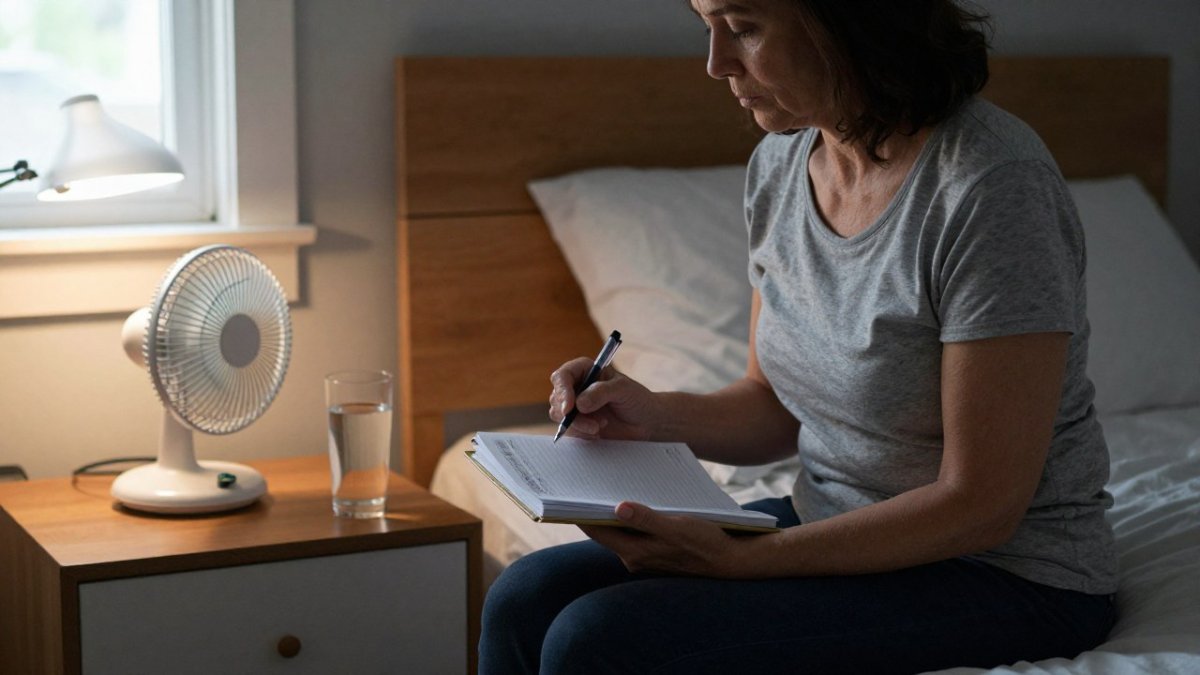
- Cool the sleep environment first. Keep the bedroom between 60-67°F, use breathable cotton or linen bedding, and layer so you can shed a layer without waking fully. A fan or cooling mattress pad may make a room more comfortable, but they do not address hormone-related causes of sweating.
- Set a consistent sleep and wake time, including weekends, to stabilize your circadian rhythm.
- Limit alcohol and late meals. Both can trigger overnight sweating and fragment sleep. Aim to finish eating 2-3 hours before bed.
- Track your symptoms each morning for two weeks. Use a simple log: time of night, severity (1-10), what you ate, stress level, medication timing, and menstrual cycle day if applicable. This pattern is what your clinician needs to distinguish Hashimoto's flares from medication effects or perimenopause.
- Review your thyroid testing and medication timing with your clinician. Bring your log and ask about TSH, free T4, and free T3 levels, as well as whether your dose or timing could be contributing.
- Add hydration during the day rather than large amounts right before bed, to reduce frequent urination that can worsen sleep fragmentation.
Cooling strategies alone may not address night sweats driven by thyroid dosing or an active flare. If you're waking drenched despite a cool room, review this with your clinician.
Tracking Symptoms and Preparing for Your Appointment
Tracking turns a vague complaint into a pattern your clinician can act on. Use a notebook or app to log the following daily for at least two weeks:
- Time and severity of each sweating episode or wake-up
- What you ate and drank in the evening, including alcohol
- Medication schedule, when you took levothyroxine or any other thyroid medication
- Stress level (1-10) and any notable events
- Menstrual cycle day and any cycle changes, if applicable
- Sleep environment, room temperature, bedding, and whether you used a fan
Bring this log to your visit and ask your clinician:
- Could my night sweats be related to my thyroid hormone levels or medication dose?
- Should we check free T3 and reverse T3, not just TSH?
- How does my medication timing interact with my symptoms?
- Could perimenopause or sleep apnea be contributing?
Our guide to tracking symptoms for a chronic illness shows a simple format you can copy. For a fuller walkthrough of sleep strategies, our guide on how to improve sleep quality with Hashimoto's goes deeper on each step.
Here is the step-by-step plan the article lays out, with the timing and targets it gives for each step.
| Step | What to do | Timing or target |
|---|---|---|
| 1 | Cool the bedroom and use breathable cotton or linen bedding | 60-67°F |
| 2 | Set a consistent sleep and wake time, including weekends | Every day |
| 3 | Limit alcohol and late meals | Finish eating 2-3 hours before bed |
| 4 | Track symptoms each morning | Two weeks |
| 5 | Review thyroid testing and medication timing with your clinician | Bring your log to the visit |
| 6 | Add hydration during the day, not right before bed | Daytime |
Red Flags: When Night Sweats and Poor Sleep Need Urgent Care
Most night sweats in Hashimoto's are manageable, but some signs need prompt medical attention. Seek care quickly for:
- Drenching sweats with fever or unexplained weight loss
- Chest pain, shortness of breath, or a racing heartbeat that won't settle
- Fainting or near-fainting
- Sweats that soak through clothing and bedding night after night
If you're unsure, call your clinician. It's better to ask than to wait. Once you've been advised to see a specialist, our guide on how to prepare for an endocrinologist consultation helps you arrive ready.
Book a Complimentary Discovery Session With Thyroid Authority
Night sweats and broken sleep can be a sign that your body needs a closer look, not something to push through. If your labs look fine but you still feel exhausted, foggy, and overheated at night, a deeper evaluation may help. Thyroid Authority is a physician-led, 12-month virtual program built on the EPIC Five™ Framework, designed to help people look for root causes of thyroid and autoimmune symptoms. Learn more by booking a complimentary discovery session at https://thyroidauthority.com/booking.
A single symptom rarely tells the whole story, and night sweats are no exception. If you want a team that looks at the full picture, our physicians can help you find the root cause instead of chasing symptoms. We offer a complimentary discovery session so you can see whether the program fits your situation. Get started with Thyroid Authority and restore your energy and clarity.
Frequently Asked Questions
Can Hashimoto's cause night sweats?
Yes, it can. Hashimoto's night sweats usually trace to shifting thyroid hormone levels, a flare-up, or a dose of levothyroxine that no longer fits your body's needs. Hormone fluctuations affect temperature regulation, so the body can sweat to cool itself during sleep. Night sweats are not a guaranteed symptom, though, and menopause, infections, blood sugar swings, and some medications cause them too. A clinician can help sort out the underlying cause.
Does hypothyroidism cause insomnia or other sleep problems?
It can. People with hypothyroidism often report frequent waking, difficulty falling back asleep, and unrefreshing sleep, which feeds daytime fatigue. Thyroid hormone influences nervous system activity and body temperature, and both affect sleep quality. Other symptoms like muscle weakness, irritability, and weight changes can add to the problem. If sleep disruption persists, ask your healthcare professional about thyroid testing and a medication review.
What are the symptoms of a Hashimoto's flare-up?
A Hashimoto's flare-up can bring fatigue, brain fog, muscle weakness, weight changes, nervousness, irritability, and a return of night sweats or hot flashes as hormone levels shift. Some people notice sleep disruption and frequent waking first. Tracking your symptoms alongside your cycle, stress, and medication timing gives your clinician a clearer picture. Bring that record to your appointment so dose adjustments and testing decisions rest on real patterns, not a single bad week.
What helps sleep when you have Hashimoto's?
Start with the sleep environment: a cool bedroom, breathable bedding, and consistent bed and wake times support temperature regulation. Limit alcohol and caffeine late in the day, and keep water nearby for hydration without drinking heavily before bed. Track night sweats and waking episodes in a journal. If symptoms continue despite these steps, a medical evaluation can check thyroid function, review your levothyroxine dose, and rule out other causes such as perimenopause or blood sugar issues.